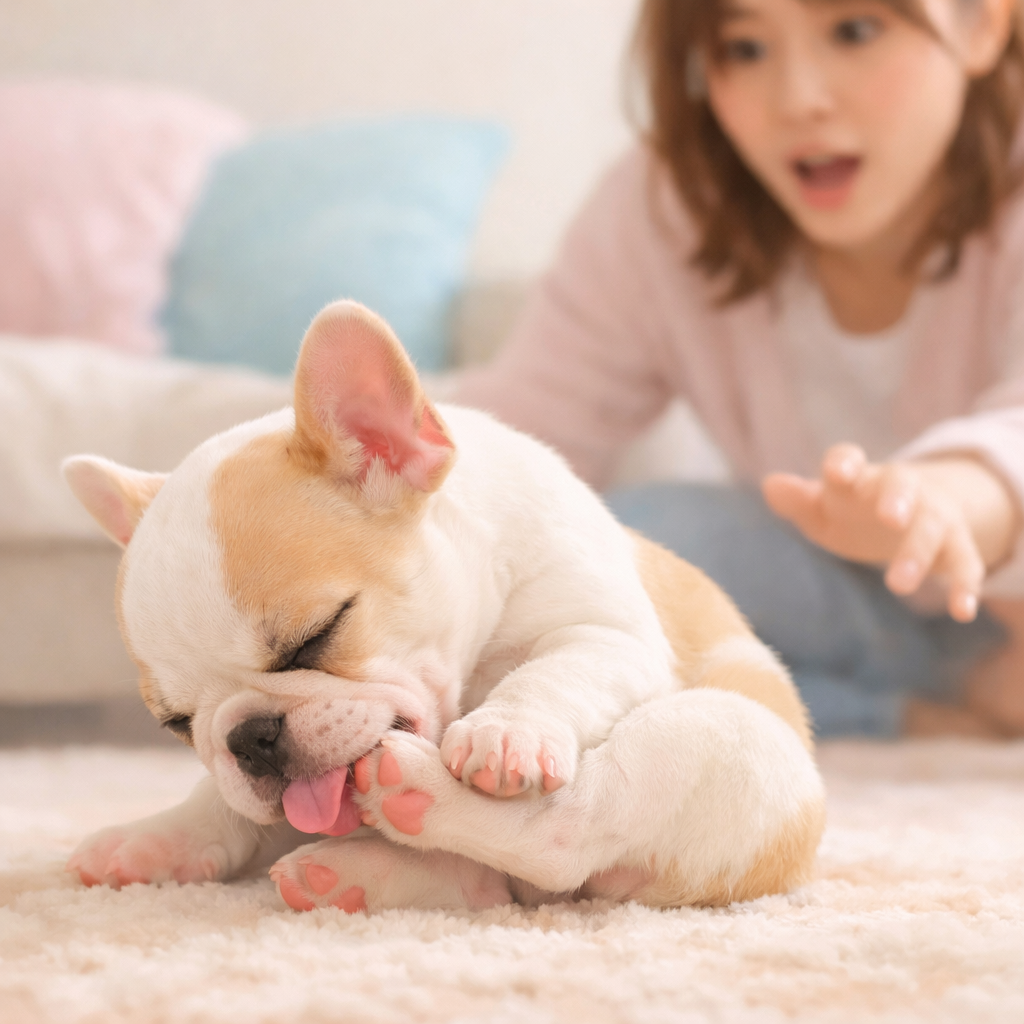
A brief paw-cleaning session after a walk can be ordinary grooming. Repeated licking that interrupts rest, leaves the skin sore or focuses on one foot deserves a closer look. It is a sign to investigate, not proof that your dog is bored or being difficult.
Start with comfort and health
Skin irritation, allergies, an injury, a damaged nail or something trapped between the toes are among the possibilities. Stress can contribute to repetitive behavior, but a behavioral explanation should not replace a veterinary assessment when licking persists.
If your dog allows gentle inspection, look for redness, swelling, broken skin, discharge, an unusual smell or a damaged nail. Stop if they resist or seem painful. Do not dig into the paw or pull out an embedded object. Severe pain, an inability to bear weight, substantial bleeding or a rapidly worsening problem needs prompt veterinary advice.
Make a useful record
- Is one paw affected, or several?
- Did the licking begin after a particular route, grooming session or product?
- Does it occur mainly after walks, at night or when alone?
- Is there limping, hair loss, a change in appetite or disturbed sleep?
- What products or treatments have already been used?
Photographs and a short video can help your veterinarian understand the pattern. Avoid human creams, essential oils and medication unless your veterinarian specifically recommends them; a dog may lick a topical product off.
Reduce irritation without turning it into a struggle
After ordinary outdoor dirt, gently rinse and dry the paws if your dog tolerates it. Use a quiet resting place and avoid repeated handling of sore skin. Ask your veterinarian how to prevent further self-trauma while the underlying problem is assessed. Simply distracting the dog every time may hide the symptom without helping the cause.
Consider the daily routine after medical needs are addressed
Provide appropriate exercise, sniffing opportunities, rest and manageable alone-time practice. If licking continues despite treatment or has become a persistent repetitive pattern, ask for coordinated veterinary and behavior support. Progress means comfortable skin, normal movement and better rest, not just suppressing the visible licking.
English edition reviewed and rewritten on October 9, 2026.