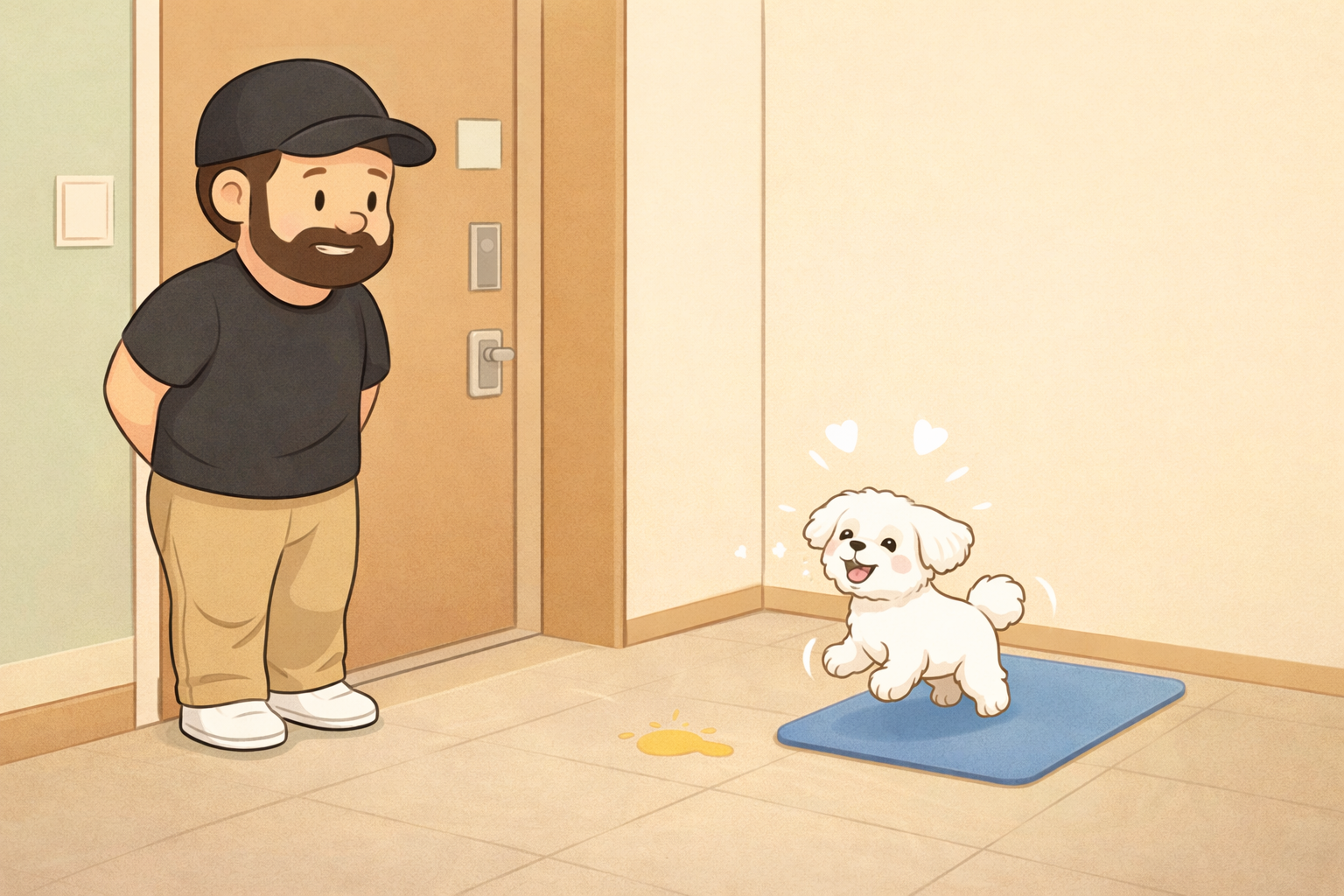
A small puddle during a greeting can be confusing, especially when your dog usually toilets in the right place. Excitement or fear may trigger urination before the dog can control it. This is not deliberate misbehavior, and punishment can make the next greeting more stressful.
Start by noticing the situation
Excitement-related accidents often happen when you return home, bring out the lead, or welcome a familiar visitor. The dog may bounce, wriggle and approach eagerly. Fear-related or submissive urination may accompany crouching, tucked posture, ears held back or attempts to avoid a reaching hand. These patterns are clues, not a diagnosis.
Arrange a veterinary check if accidents are new, frequent or unrelated to greetings, or if there is straining, pain, blood in the urine, an unusual smell or leaking during sleep. A dog that cannot pass urine needs urgent veterinary attention.
Make the greeting easier
- Offer a toilet opportunity first. When practical, let your dog relieve themselves before an expected visitor arrives.
- Keep the entrance quiet. Put down your bag, move slowly and avoid an excited voice, staring, looming over the dog or immediately picking them up.
- Let your dog choose to approach. Turn slightly sideways. A worried dog does not have to greet anyone.
- Try brief, gentle contact. If the dog approaches with a relaxed body and welcomes touch, pet the chest or side briefly, then pause. Stop if the dog turns away, crouches or becomes overwhelmed.
- Clean without a reaction. Use a pet-safe enzymatic cleaner according to its instructions. Scolding after an accident adds pressure without teaching bladder control.
Practice away from the busy doorway
Teach a mat cue when nobody is arriving. Reward a step onto the mat, then gradually reward relaxed stays of a few seconds. Place it far enough from the door that the dog has space. The mat should offer a comfortable option, not become a place where the dog must endure frightening greetings.
Begin rehearsals with a familiar adult entering quietly. Keep the exercise easy enough that the dog remains comfortable. If the dog urinates, becomes frantic or hides, reduce the excitement or distance demands next time. Do not repeat greetings until the dog is exhausted.
A two-week observation plan
Use the first few days to record triggers and establish calm arrivals. During the next few days, practice the mat separately. Only then add a quiet visitor rehearsal. Record whether accidents are becoming less frequent and whether your dog looks more comfortable. Two weeks is a useful review point, not a promised cure; some dogs need more time or veterinary and behavior support.
Common questions
Should I ignore my dog completely? You can offer calm reassurance if it helps. The aim is to reduce pressure and excitement, not to withhold comfort from a frightened dog.
Will a puppy grow out of it? Some improve as they mature, but persistent accidents still deserve assessment. Do not assume every puddle is a training issue.
What if picking the dog up triggers it? Avoid unnecessary lifting and practice comfortable handling separately. If handling seems painful, speak to your veterinarian.
Veterinary background: VCA on excitement, submissive and conflict urination.
English edition reviewed and rewritten on October 9, 2026.