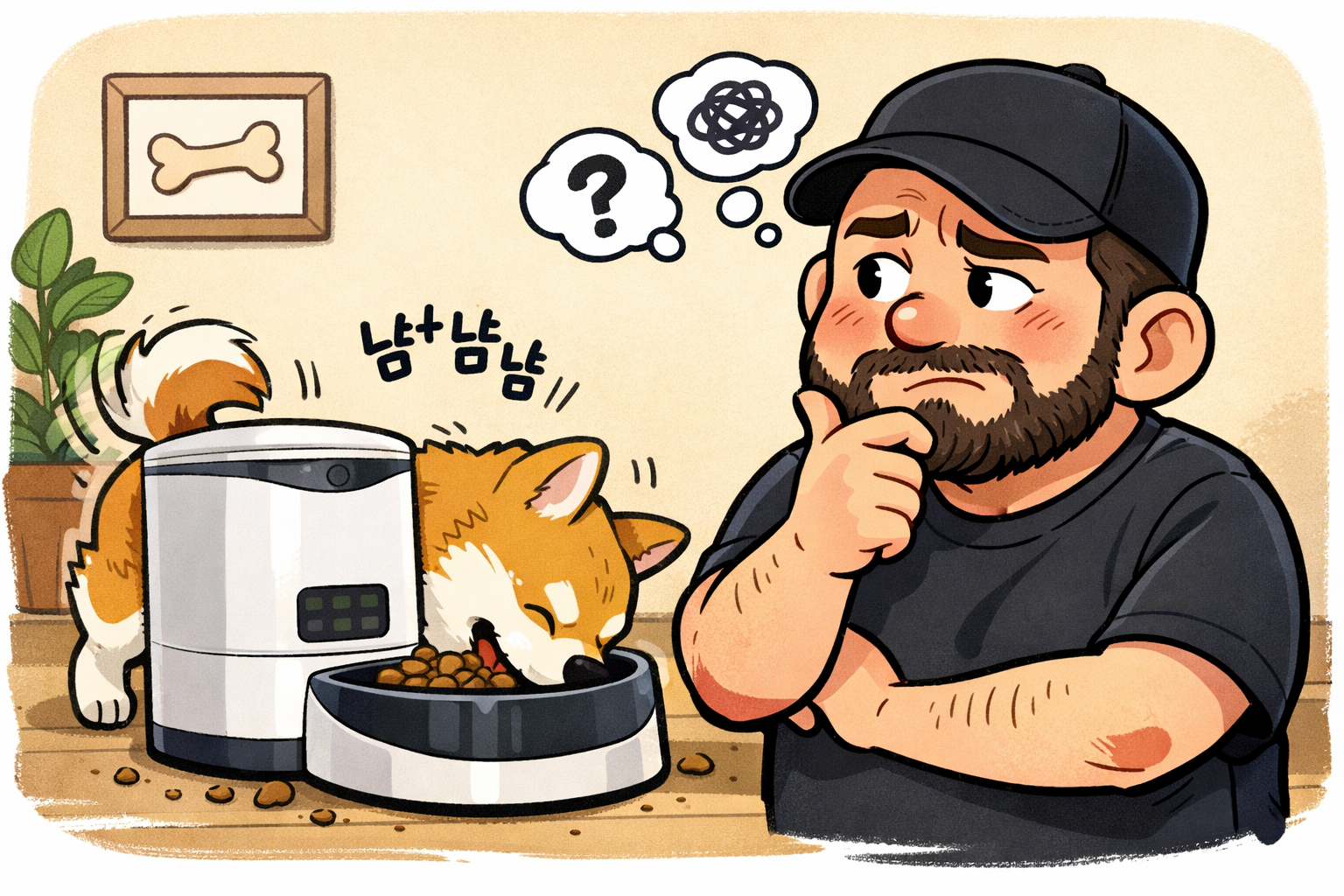
An automatic feeder can be useful when household schedules vary. It can deliver a planned meal while you are occupied, but it cannot confirm that your dog ate normally, prevent every food conflict or replace a caregiver. The important question is how the device fits into your dog’s care routine.
Check the practical basics first
- Test several meals while you are home. Confirm that the food dispenses reliably and the portion matches your plan.
- Follow the manufacturer’s instructions for compatible food, cleaning, power and battery backup.
- Include treats and training food when calculating the day’s total intake.
- Check the bowl and your dog’s appetite rather than relying only on an app notification.
- Arrange a person who can help if the device jams or you cannot return as expected.
Dogs on a medically prescribed feeding schedule need a plan agreed with their veterinarian. A device alert is not sufficient monitoring for a dog who is unwell or must reliably eat before medication.
Introduce the sound and movement gradually
Let your dog investigate the switched-off feeder without pressure. Run a small test while you are nearby. If the motor or moving tray frightens the dog, increase distance and introduce it more gradually. Do not leave a worried dog alone with a new machine and assume hunger will solve the problem.
Watch for food competition
In a multi-dog home, use separate feeding spaces so each dog can eat undisturbed. A dog waiting beside the feeder may be blocking another dog’s access even without barking. If there is freezing, growling or a history of fights, physical separation and professional advice are more appropriate than asking the dogs to work it out.
Keep meals separate from a contest for attention
Some dogs become very excited before food arrives. Teach a comfortable resting place outside the feeding moment and provide predictable activity and rest. Do not repeatedly postpone necessary meals until a distressed dog performs perfect obedience. There is no universal percentage of food that must be hand-fed to preserve your relationship.
Continue walks, play, social contact and observation of health. A feeder may provide a pleasant activity during an absence, but eating briefly does not prove that separation-related distress has resolved. If a camera shows pacing, vocalizing or escape attempts after the meal, address that problem separately.
English edition reviewed and rewritten on October 9, 2026.