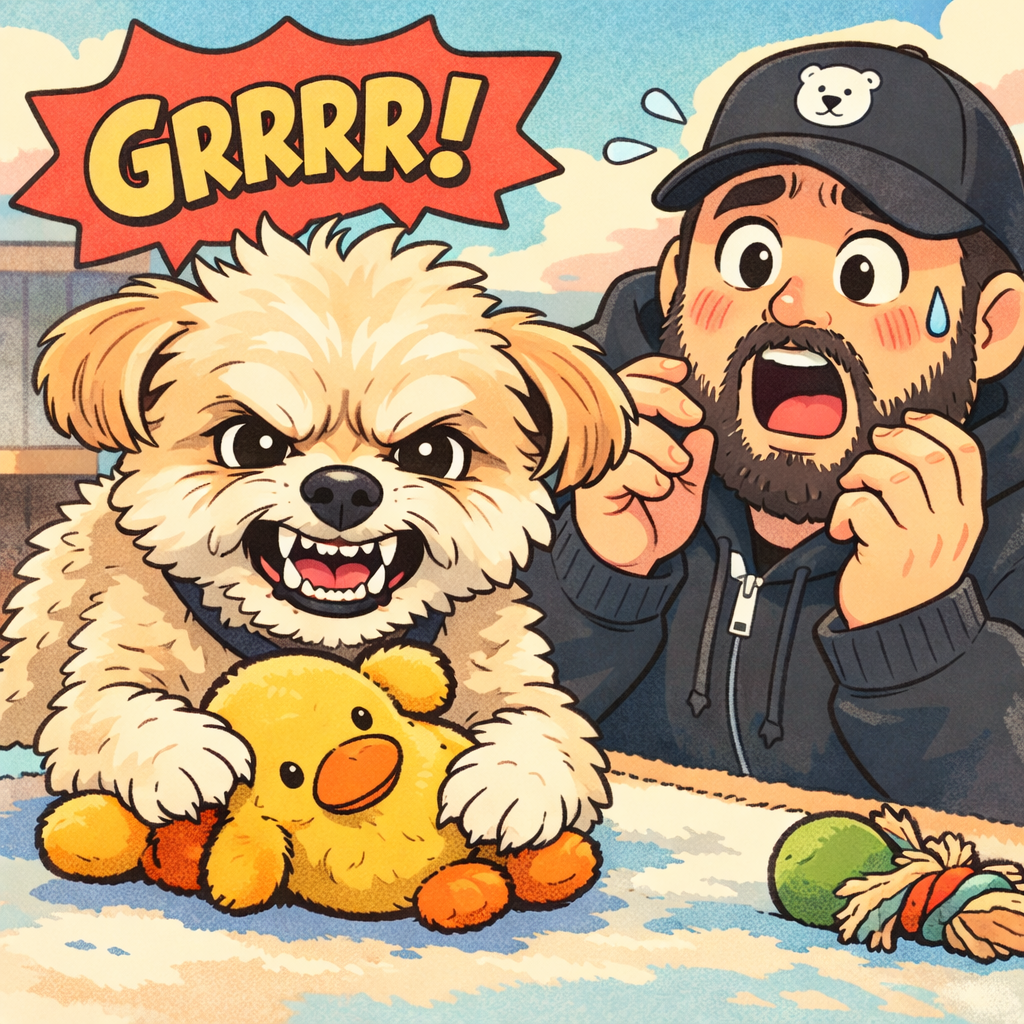
A dog who freezes over a toy, growls near a food bowl or stiffens when approached on the sofa is communicating discomfort about losing access to something. Resource guarding calls for a safety plan. Reaching in to prove ownership can turn a warning into a bite.
What to do during a guarding incident
Pause, avoid reaching for the item or collar, and give the dog space. Keep children and other animals away. Do not corner the dog, pry the mouth open or punish the growl. If a dangerous object is involved, contact a veterinarian or qualified behavior professional for situation-specific advice rather than putting your hands at risk.
A growl is useful warning information. Suppressing the sound does not necessarily change the discomfort underneath it. Watch for earlier signs too: suddenly becoming still, hovering over an item, turning away with it or showing a tense, fixed stare.
Prevent rehearsals of the conflict
- Put laundry, rubbish and unsafe objects out of reach.
- Feed dogs separately and leave them undisturbed while eating.
- Use doors or barriers to keep children away from food, chews and resting dogs.
- Provide quiet resting places where nobody will pull the dog out.
- Discuss sudden guarding or sensitivity to movement with a veterinarian, because discomfort may contribute.
Practice trading only in safe, easy situations
For a dog with no bite history or threatening behavior in the practice setting, begin with a low-value toy. Offer something the dog prefers at a comfortable distance. When the dog voluntarily leaves the toy and is safely away, retrieve it without reaching across the dog. With a safe toy, returning it can help show that releasing something does not always mean losing it forever.
Teach a release cue after the easy exchange is predictable. Do not repeat the cue while pulling on the object. Stop if the dog stiffens, gulps the object, guards more intensely or refuses the offered reward. Those are reasons to change the plan with professional help, not to use a better bribe and reach closer.
Guarding a sofa or a person
For resting places, teach a separate cue to move to a mat during relaxed practice. Manage access to the sofa when necessary, and avoid dragging the dog down. If the dog reacts to someone approaching you, increase distance and use barriers before working on a trained position. Do not assume the dog is being protective or trying to run the household.
When professional help comes first
Seek qualified help if there has been a bite, the behavior is escalating, children are present, or you cannot manage the situation safely. A veterinarian can check for pain and refer you to an appropriately qualified behavior professional. Food-bowl guarding and guarding involving several dogs are poor situations for improvised exercises.
The aim is a dog who feels safe enough to give things up voluntarily. Measure progress by relaxed behavior and fewer conflicts, not by whether you can take an object away by force.
English edition reviewed and rewritten on October 9, 2026.