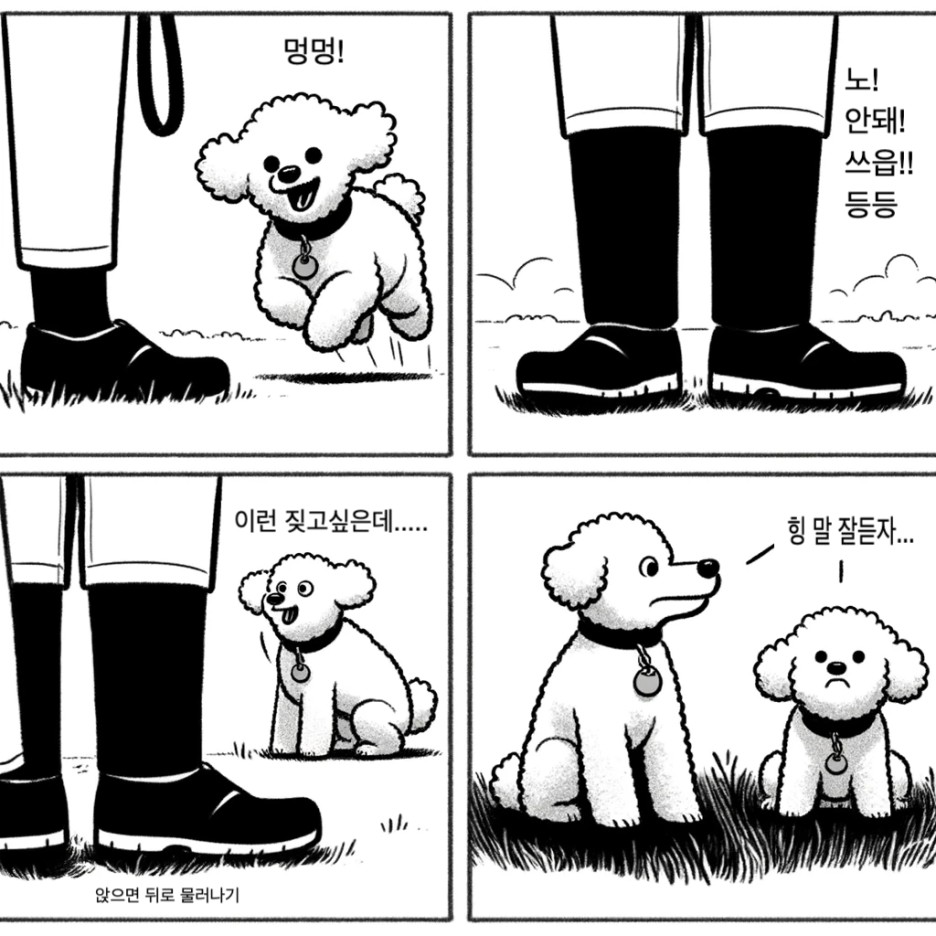
A puppy who jumps or grabs clothing needs help learning what to do instead. Physically confronting the puppy may stop the movement for a moment, but can also increase excitement or fear. In this guide, managing access means arranging space safely, not marching into a dog until they give way.
For jumping: make calm greetings easy
Prepare a gate or another comfortable separation before visitors arrive. Approach when your puppy can keep four paws on the floor, and offer attention or a small reward low enough that jumping is unnecessary. If excitement rises, calmly pause and give more space. A sit can be useful if already learned, but four paws on the floor is a reasonable starting point.
Do not knee the puppy in the chest, step on their feet or push them backward. Children should not be responsible for physically managing an excited dog.
For mouthing: protect hands and provide an outlet
Keep suitable toys nearby and redirect play to them before hands become the target. Avoid using fingers as moving toys. If teeth touch skin, calmly stop the interaction when safe and take a brief break behind a barrier if necessary. Check whether the puppy is overtired, needs the toilet or has had too much exciting activity.
Do not hold the mouth closed or force a hand into it. If the behavior involves stiffness, guarding, pain during handling or bites that cause injury, treat it as a safety concern rather than ordinary playful mouthing.
Teach an alternative outside the difficult moment
- Choose a simple action: going to a mat, bringing a toy or standing with four paws down.
- Practice in a quiet room and reward immediately when it happens.
- Add a mild version of the real situation, such as one familiar adult approaching slowly.
- Keep the session short and lower the difficulty if the puppy cannot succeed.
Barriers are management, not punishment
A gate can prevent repeated jumping while your puppy learns, provided the separated space is comfortable and does not create distress. Never chase a frightened dog into a corner or use your body to provoke submission. The goal is predictable access to good things through behavior the puppy understands.
For training-method background, see AVSAB’s recommendation for reward-based training.
English edition reviewed and rewritten on October 9, 2026.