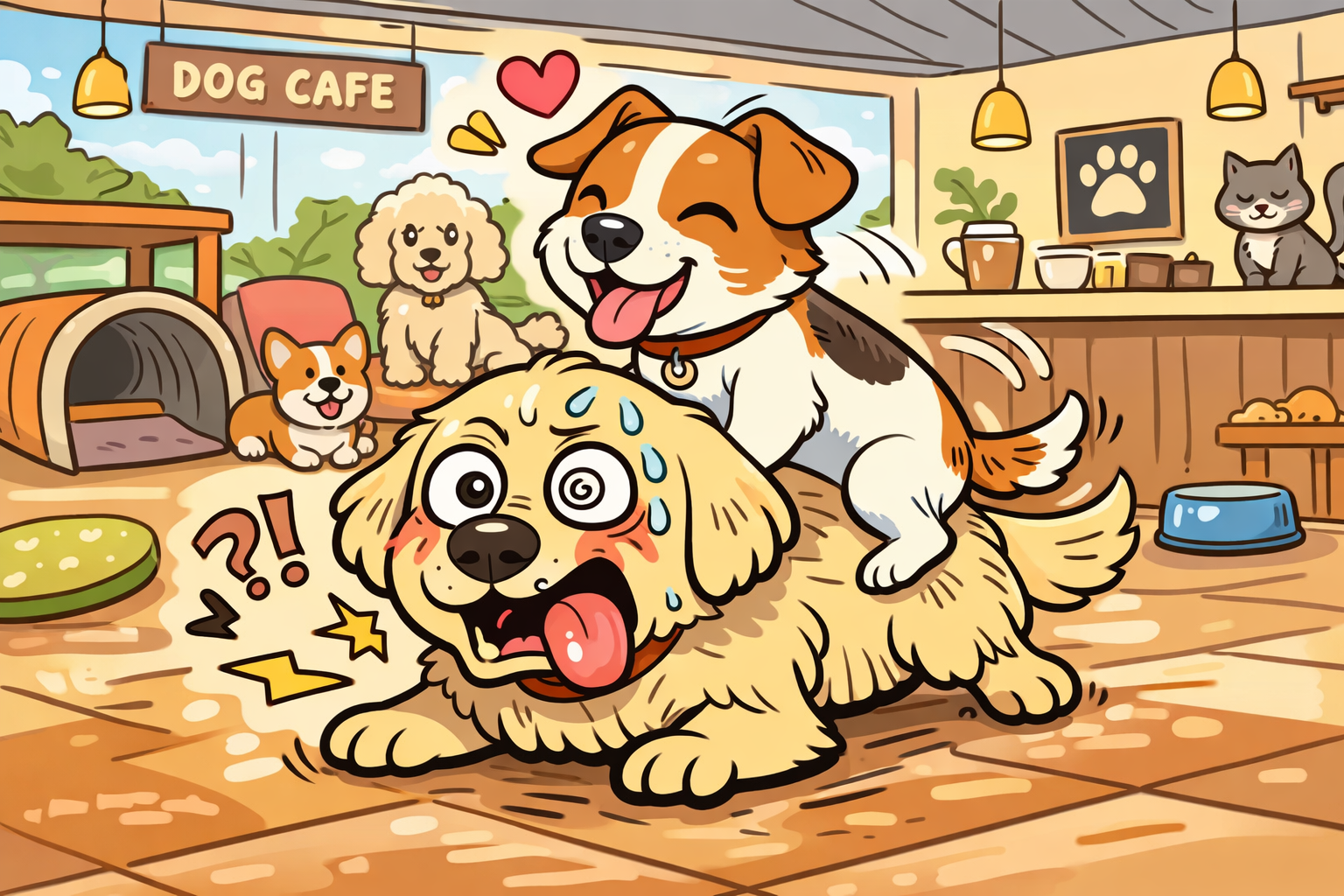
Mounting can happen during play, a visitor’s arrival or an exciting moment before a walk. Sexual motivation is one possibility, but excitement, stress and learned attention-seeking can also contribute. A single episode does not tell you that a dog is trying to establish rank.
Look for the pattern
Record what happened just before the behavior, who or what the dog mounted, and how the interaction ended. Does it follow long, intense play? Does it start when a visitor reaches toward the dog? Does a loud reaction turn it into an energetic game? These details are more useful than labeling the dog naughty.
Interrupt without adding excitement
- If the dog mounts your leg, calmly move out of reach when safe. Avoid wrestling, shouting or pushing repeatedly.
- Use a familiar cue to invite the dog to a mat or another comfortable space. Reward the alternative, then offer a quiet break.
- For visitors, arrange a gate or separate resting area before the door opens. Practice calm arrivals at a manageable distance.
- During dog play, call the dogs apart before either becomes overwhelmed. If one freezes, tries to escape or growls, end the interaction. Do not put your hands between dogs in conflict.
Prevent the next episode
Shorten play before it becomes frantic and build in rest. Teach a mat cue separately, when the dog is relaxed, so it is familiar when you need it. Reward calm approaches and four paws on the floor before mounting starts. Repeatedly interrupting an exhausted or worried dog is less useful than changing the situation that produces the behavior.
A quiet week of observation can reveal useful patterns, but it is not a guaranteed cure. Judge progress by whether your dog settles more easily and whether other dogs and people remain comfortable.
When to seek help
Sudden, persistent mounting or behavior accompanied by genital licking, skin irritation, discomfort or urinary changes deserves veterinary assessment. Ask for qualified behavior support if interruption triggers growling or biting, or if children are being targeted. Neutering is not a universal solution; discuss its potential benefits and limitations with your veterinarian.
English edition reviewed and rewritten on October 9, 2026.