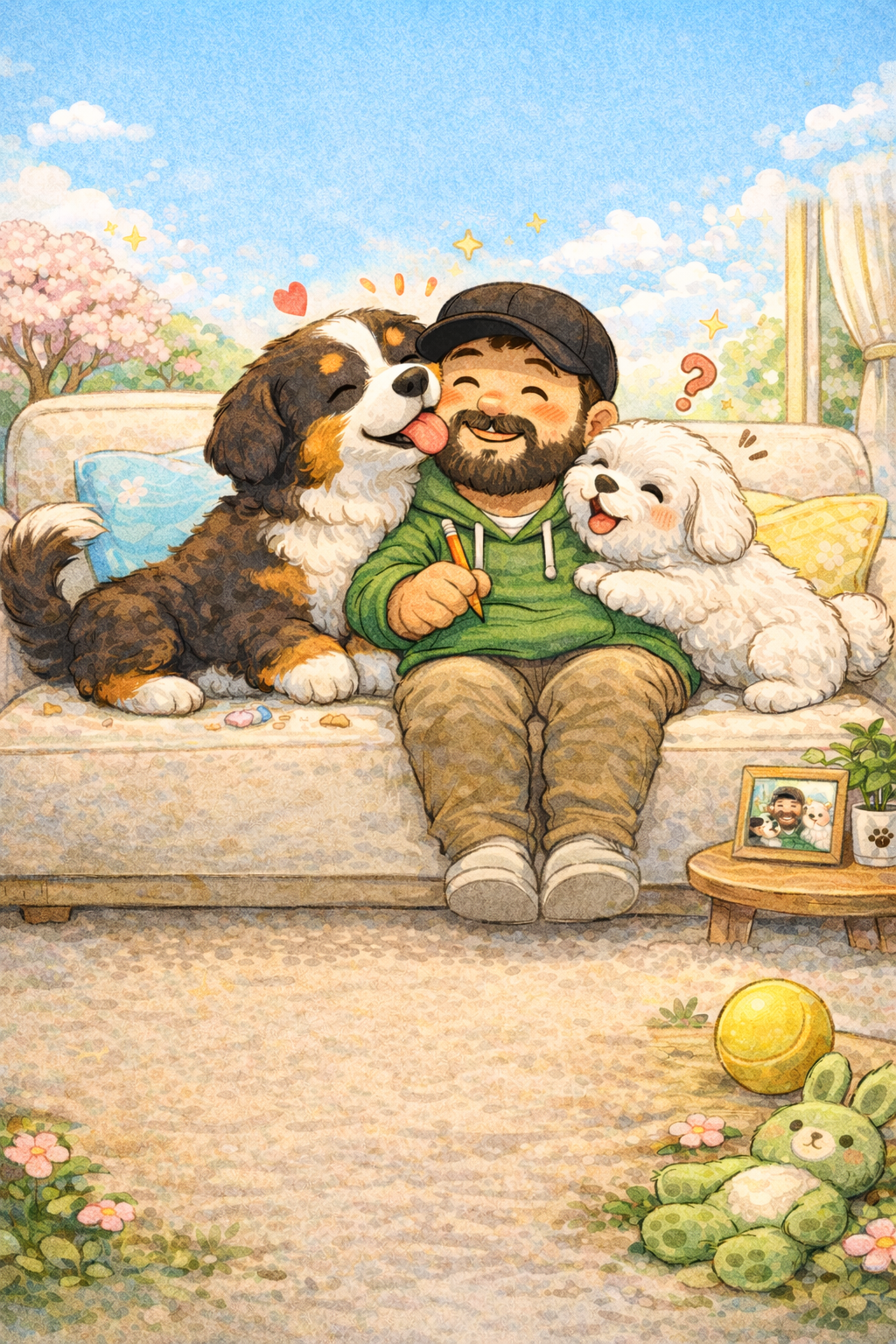
A dog who licks your hand or leans against your legs may be greeting you, asking for attention or seeking reassurance. The same movement can have different meanings in different situations. Licking alone does not establish that a dog is trying to dominate a person.
Look at what happens before and after
Notice the dog’s posture, the trigger and your response. A loose, relaxed body on the sofa tells a different story from a tense dog pressing against you when a stranger arrives. Also ask whether the behavior reliably produces petting, food or play.
- Coming home: greetings and excitement may produce licking and close contact. Slow movements and a quieter arrival can help.
- Preparing food: the dog may have learned that nudging starts the next step. Reward a simple, comfortable alternative before the demands become intense.
- Sitting on the sofa: attention may have become a predictable part of the routine. Offer a nearby bed and invite relaxed contact when it suits you both.
- Picking up keys or welcoming visitors: persistent clinging may reflect unease. Check for other stress signs and make the situation easier.
- Before sleep or after a walk: your dog may be seeking a familiar settling routine. Water, a quiet place and an appropriate chew can provide a calmer transition.
You do not have to stop harmless affection
If your dog is relaxed, the contact is welcome and either of you can end it comfortably, there may be nothing to change. Training becomes useful when the behavior disrupts daily life, causes discomfort or accompanies distress. Set a clear boundary without treating the dog as disobedient for wanting contact.
Teach an easier way to ask
- Choose one alternative, such as resting on a mat or briefly touching a hand with the nose.
- Teach it in a quiet setting, before you need it during a greeting.
- Offer attention for relaxed behavior proactively, rather than only after repeated nudging.
- If licking becomes unwanted, calmly pause the interaction or move your hand away. Reward a brief pause or the alternative behavior when it is easy for the dog to succeed.
- Keep the same response across family members and practice in one or two everyday situations first.
Do not withhold necessary meals, water, toilet breaks or comfort to demand perfect stillness. If the dog becomes more anxious, address the anxiety rather than continuing an attention-withholding exercise.
When licking needs a different response
Licking a person’s hand differs from repeatedly licking a paw or another body area. Persistent self-licking, redness, hair loss, an unusual smell, limping or a sudden change deserves veterinary assessment. Repetitive licking that disrupts sleep or is difficult to interrupt also needs investigation.
For the next week, record the two situations where licking or leaning happens most. Note the dog’s body language and what helped. The useful question is not whether licking is always good or bad, but whether your dog is comfortable and has a clear, workable way to communicate.
English edition reviewed and rewritten on October 9, 2026.