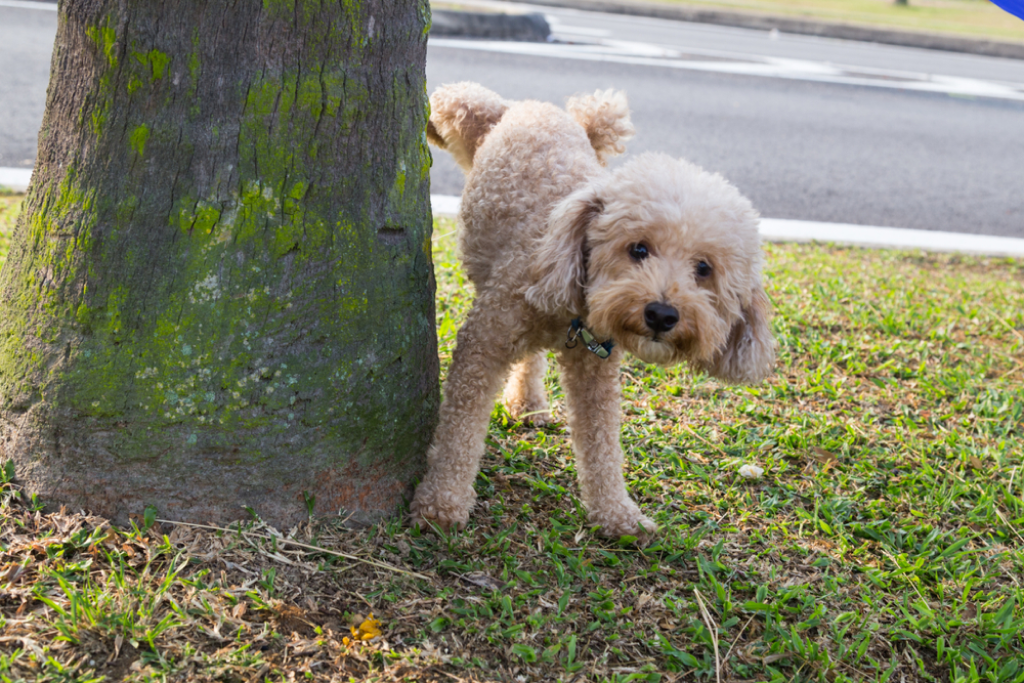
Dogs use scent as part of communication, and urine marking is one way they leave information. A dog stopping at familiar outdoor locations is not automatically anxious or challenging an owner. The practical question is where it happens, whether it has changed and whether health or safety is affected.
Marking is not every toilet accident
Small amounts on selected objects can suggest marking, but urinary discomfort, incomplete toilet training and other problems can look similar. Note timing, quantity and accompanying behavior rather than diagnosing from the posture alone.
Sudden frequency, straining, pain, blood or leaking during sleep deserves veterinary assessment. A dog who cannot pass urine needs urgent care.
Outdoor boundaries
Allow appropriate sniffing and toileting in suitable places while keeping the dog away from private belongings, shop entrances and other unsuitable targets. Guide the route early, before the dog reaches the object. Follow local cleanup and access rules.
Trying to stop every sniff can make walks frustrating. A clear distinction between allowed exploration and protected areas is more useful than treating scent investigation as disobedience.
When marking moves indoors
Look for recent changes such as a visiting dog, new furniture, household conflict or access to an unfamiliar room. Clean carefully, supervise and reward toileting in the intended place. Do not punish or force the dog to inspect the mess.
Keep a short log and share it with your veterinarian or trainer if the pattern persists. Understanding marking provides a starting point; it does not remove the need to rule out discomfort or create a safer, more predictable environment.
Related guides
English edition rewritten on October 9, 2026.