Practical starting point
Practice absences short enough that the dog remains comfortable, using a camera when practical. Return and reduce difficulty if distress appears; do not wait for panic to become silence. Genetics, previous experiences and life changes also matter, so prevention is not a guarantee. Persistent distress needs veterinary and qualified behavior support, not a longer forced absence.
Hello. I am a Saramgom, a dog trainer and behavior modification expert. In fact, in the case of separation anxiety, many people have difficulty because once it occurs, training must be constant and long-term. So today, we will organize pet separation anxiety, a problem that guardians often face, in the order of “Definition – Cause – Prevention.”
3 key things
- Distinguish what separation anxiety is and how it differs from boredom/lack of exercise.
- We will summarize the 6 reasons why it occurs and help you find the case in your home
- It is designed so that you can follow the “Leave Alone Routine 7 Steps to Prevent Separation Anxiety”, which is available starting today.
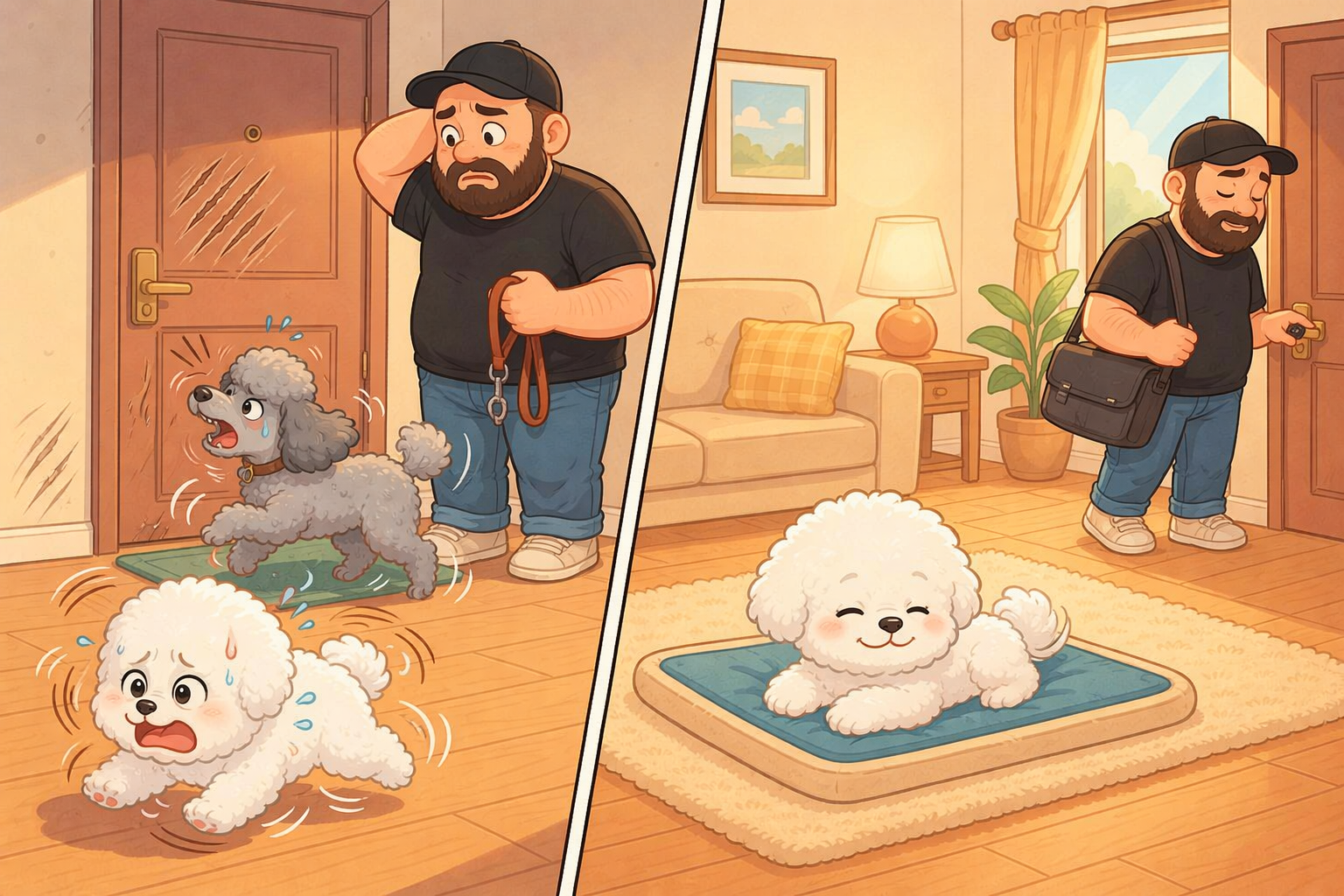
What is separation anxiety? (Definition + Common Misunderstandings)
Separation anxiety is not simply a problem caused by “liking the guardian,” but refers to a condition in which a child feels great anxiety in a situation where the guardian (or family member) disappears, and is unable to control the anxiety on his or her own, which is expressed in behaviors such as barking/howling/destruction/misusing the toilet/scratching at the door/drooling/panting.
Separation anxiety vs boredom/lack of exercise/noise response distinction
- Boring/lack of exercise: Even if there is a guardian, excessive energy can lead to mischief/destruction.
- Noise Reaction (Alert/Starle): If your child only explodes at certain sounds (doorbell, construction, motorcycle), separation anxiety may not be the “main cause”
- Possible separation anxiety: Signs of anxiety often begin as soon as the caregiver leaves (or as they prepare to leave) and continue/worsening throughout time alone.
‘진짜 분리불안’일 때 자주 보이는 행동
- Just getting ready for the guardian to go out (clothes/bag/keys) makes them nervous and follows them around
- 문/창문 긁기, 탈출 시도, 지속적인 짖음/하울링
- 침 흘림, 헥헥거림, 배변 실수, 반복 배회(왔다갔다)
- 귀가 후 과도한 흥분(“반가움”처럼 보여도 불안 신호일 수 있어요)
Why does it happen? (6 causes)
분리불안은 보통 한 가지 원인보다, 여러 요인이 겹쳐 커집니다.
1) Environmental change
Anxiety can increase when the rhythm of life changes, such as moving, changes in family schedules, transition from home to work, and guardian health issues.
2) 출발 신호 학습(열쇠·옷·가방)
아이 입장에서는 “열쇠 소리=혼자 남는다”가 강력한 예고 신호가 됩니다. 그래서 출발 준비만 해도 먼저 무너져요. One of the worst signs is saying goodbye. 인사=혼자 불안해지는 강력한 동기가 될 수 있습니다.
3) Lack of experience of being alone (including puppy period)
If you always have someone by your side for a long time, you may end up in a state where you ‘never learned’ how to be alone.
4) 불안 기질 + 예측 불가능한 루틴
A child with a sensitive temperament can react greatly to even small changes. 루틴이 들쭉날쭉하면 더 불안해집니다.
5) 혼남, 처벌이 불안을 키우는 구조
If you scold the child after returning home for something that happened while going out, the child may learn to be “anxious + even scared of the guardian.”
6) 건강 문제, 통증 가능성
If the dog has suddenly started acting like separation anxiety or is an older dog, we recommend checking its physical condition as well.
예방 가능해요: “혼자두기” 훈련 7단계
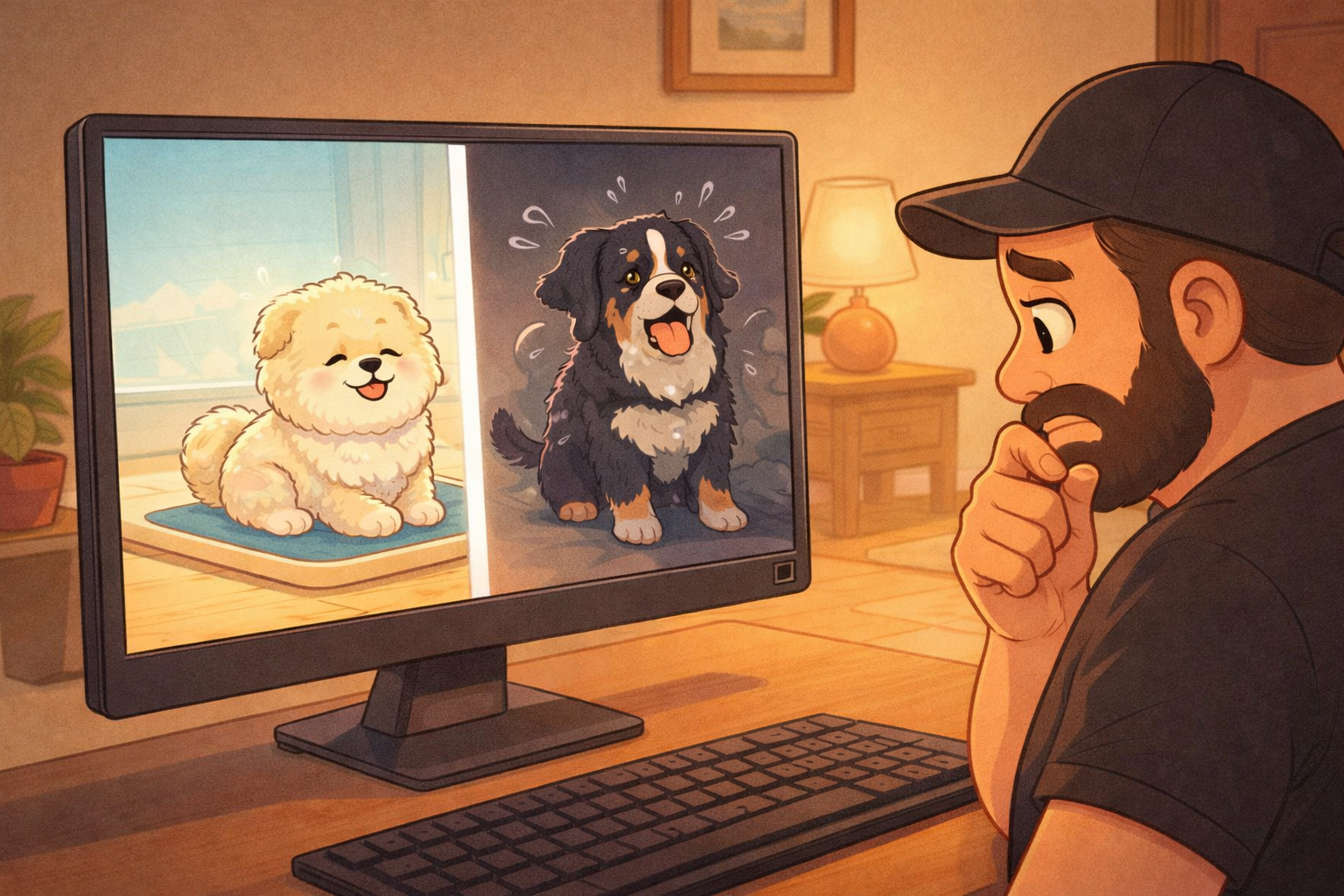
Check your child’s condition with the camera
Just remember two core principles.
① Practicing leaving someone alone while anxious (panic) can actually make things worse. (Lower the difficulty level)
② Build up from the smallest steps so that “being alone = a good thing”.
1) First look at ‘When I’m Alone’ with the camera
The most common pitfall is “not knowing exactly what the child does when I’m not around.” You can get your bearings in just 10 to 20 minutes.
2) Creating a safe zone (mat/house)
Please create a “safe base” where you can stay when you are alone.
(Internal link) Complete summary of seat (mat/house) training → “The starting point for leaving alone is a ‘stable base.’”
3) Disabling the departure signal (fake departure)
Repeat start signal=nothing, like picking up the keys and putting them down again, putting on clothes and taking them off again.
However, if your child is nervous, reduce the intensity to a lower intensity.
4) Rule for increasing from seconds to minutes
- Out the door 1 second → 3 seconds → 5 seconds (maintain “calmness” even after returning)
- Once you feel comfortable with 10 seconds, move on to 20 seconds, 30 seconds…
- If there is a failure (barking/scratching at the door) in the middle, it returns to the previous success stage.
- The key is to increase small successes.
5) Timing of enrichment (nosework/payment method)
I like the feeling of adding puzzle pay/nose work as a bonus when I don’t mind being alone, rather than “just before going out.”
Throwing a toy while anxious can make a child “unable to eat and become more sensitive.”
6) 1 minute ‘calm routine’ upon return
Excessive greetings immediately after returning home can cause feelings of excitement and anxiety.
Put down your bag → take a sip of water → sit quietly After the same 1-minute routine, communicate calmly.
7) How to reset when failure
- Halves the practice time (difficulty) and increases the number of successes.
- On days when going out for a long time, it is also possible to reduce the “panic experience” by getting help from family/acquaintances, day care, etc.
- In case of escape attempt/self-harm/severe panic, professional help is recommended.
Summary
1) Separation anxiety may not be due to “a lot of love,” but failure to control anxiety in situations where one is left alone
2) First, check with the camera, lower the starting signal, and build up the stages of leaving alone starting from the second.
3) If it is at the level of panic/self-harm, expert (veterinary/behavioral) help is recommended rather than surviving with training alone.
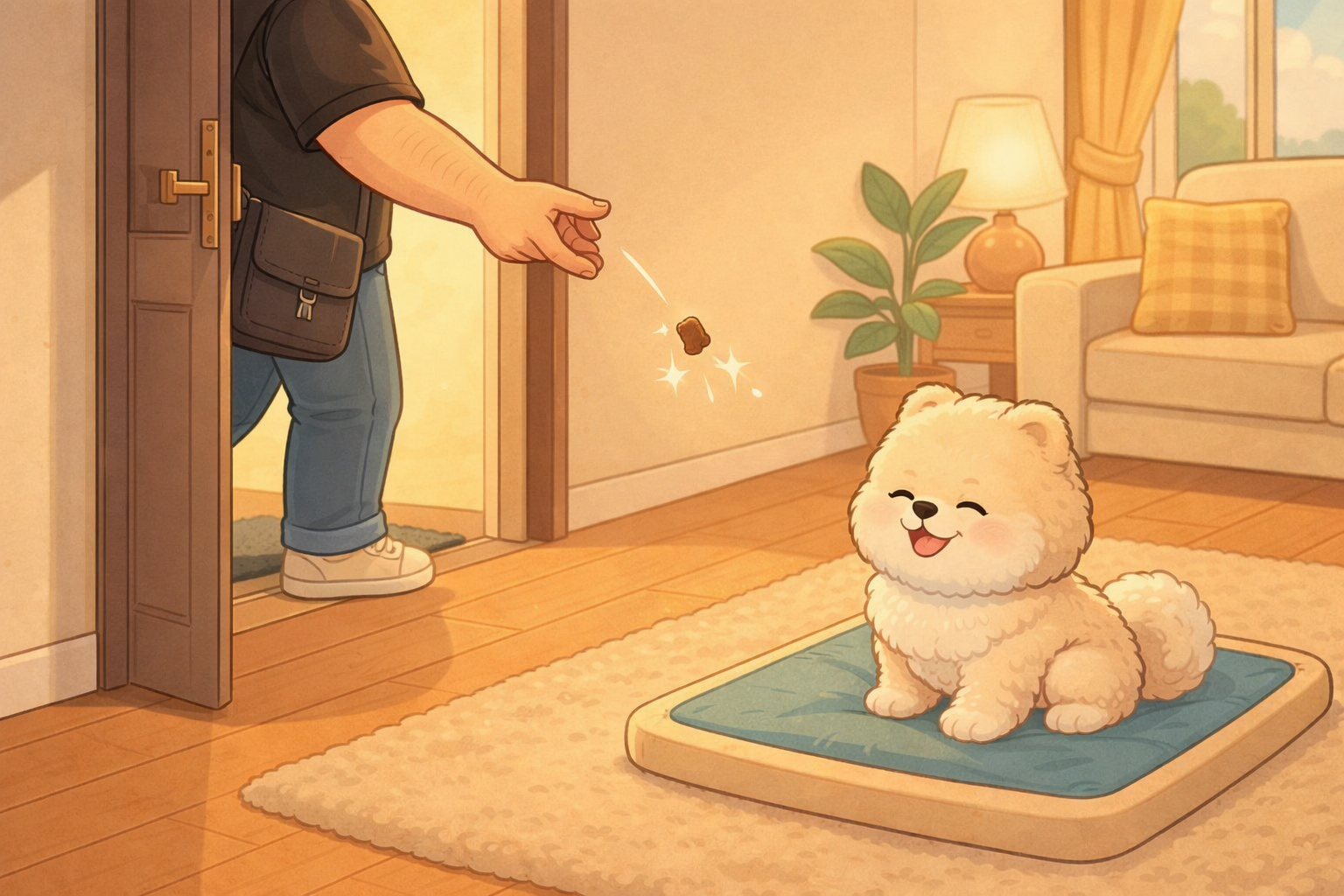
Checklist: What stage is my house now?
- □ Just getting ready to go out makes me nervous and follows me around
- □ Barking or scratching the door/window as soon as you leave
- □ Drooling/panting/wandering continues when alone
- □ Potty mistakes/disruptions occur most often “when left alone”
- □ When looking at the camera, there is little time to calm down
If there are three or more, there is a high possibility of separation-related stress. (In particular, checking with a camera increases accuracy.)
Frequently Asked Questions
Q1. Does separation anxiety naturally get better with age?
A. Some adapt, but in many cases, it can grow as experience (learning) accumulates. That’s why “prevention routines” are important.
Q2. If you leave him alone, he barks. Can I scold him every time he barks?
A. If a child is scolded after returning home, it may be difficult for the child to understand why he or she is being scolded, and anxiety may increase. Instead, lower the difficulty level and go for step training.
Q3. Can separation anxiety be solved by giving snacks/toys?
A. It is helpful when anxiety is low, but when you are in a state of panic, you often cannot eat. The first step is to learn “alone = okay”.
Q4. Is a kennel/crate required?
A. It’s not required. However, it is helpful to create a safe space where the child is comfortable (including mat/house/cushion).
Q5. To what extent should I seek professional help?
A. If there is an escape attempt, self-harm, severe panic, persistent barking at the level of a neighbor complaint, or if the dog gets worse even if the training difficulty is lowered, consultation is recommended.
A good article to read together
Separation anxiety is usually quickly dealt with in the following order: Understanding anxiety signals → Stabilizing routines → Creating alternative behaviors (places). If you look at the article below together, it becomes much clearer as to why it is like that and where you should start addressing it.
Related causes (anxiety signal, starting signal, guardian influence)
- Why is my dog shaking? (Check for anxiety signals) — Before “barking/destruction,” there are already signals your body is telling you.
- If I am anxious, will my dog become more anxious too? — There are many homes where “anxiety trailers” can be reduced by organizing just 10 seconds before departure.
- Why do dogs lick? Why are you kneading (leaning on)? — Just getting ready to go out (bag/key) gives you a “departure signal” hint that makes you anxious.
Related solutions (alternative actions, routines, step training)
- Separation anxiety, barking, hyperexcitability… Solving problems that arise at home with one seat training — A key article that replaces “alone = anxiety” with “seat = stability”.
- What should I do with a whining puppy? — 요구성/불안형 구분만 해도 분리불안 접근이 확 쉬워져요.
- 강아지 하울링, 왜 하는 걸까? Reason, meaning, solution for each situation — Let’s establish a routine before crying (howling) turns into a complaint when you are alone.
- 강아지 훈련이 실패하는 집의 공통점 7가지 — “열심히 하는데 왜 안 늘지?” 대부분은 기준/일관성 문제로 새요.
Advanced/Expanded (Energy·Environment·Management)
- 강아지 산책을 못했어요! Alternative activities for walking that you can do at home — When you have energy left over, “behaviors that look like anxiety” break out more easily.
- 강아지 산책 적정 온도는 몇 도일까요? — 무리한 산책은 오히려 불안을 키울 수 있어 “적정 활동량”이 중요해요.
- Time zone and location Establish a pattern in 7 days with ‘Toilet Mistake Map’ (Toilet Training-1) — If you make a mistake (defecation) when you are alone, you can quickly find the cause just by recording it.
Separation anxiety is not a problem that can be extinguished by “getting scolded,” but it is a game that builds the child’s experience of being okay with being alone starting from very small steps. 위 링크는 그 경험을 빠르게 만들기 위한 ‘지름길’입니다.
Separation anxiety has different “triggers (starting signal)” and “thresholds (time to endure)” for each child, so setting according to the house structure/routine is effective.
If you need a stage diagnosis of your home based on the checklist, we will help you with a visit/consultation (Pohang).
Related guides
English edition copyedited and supplemented on October 9, 2026.