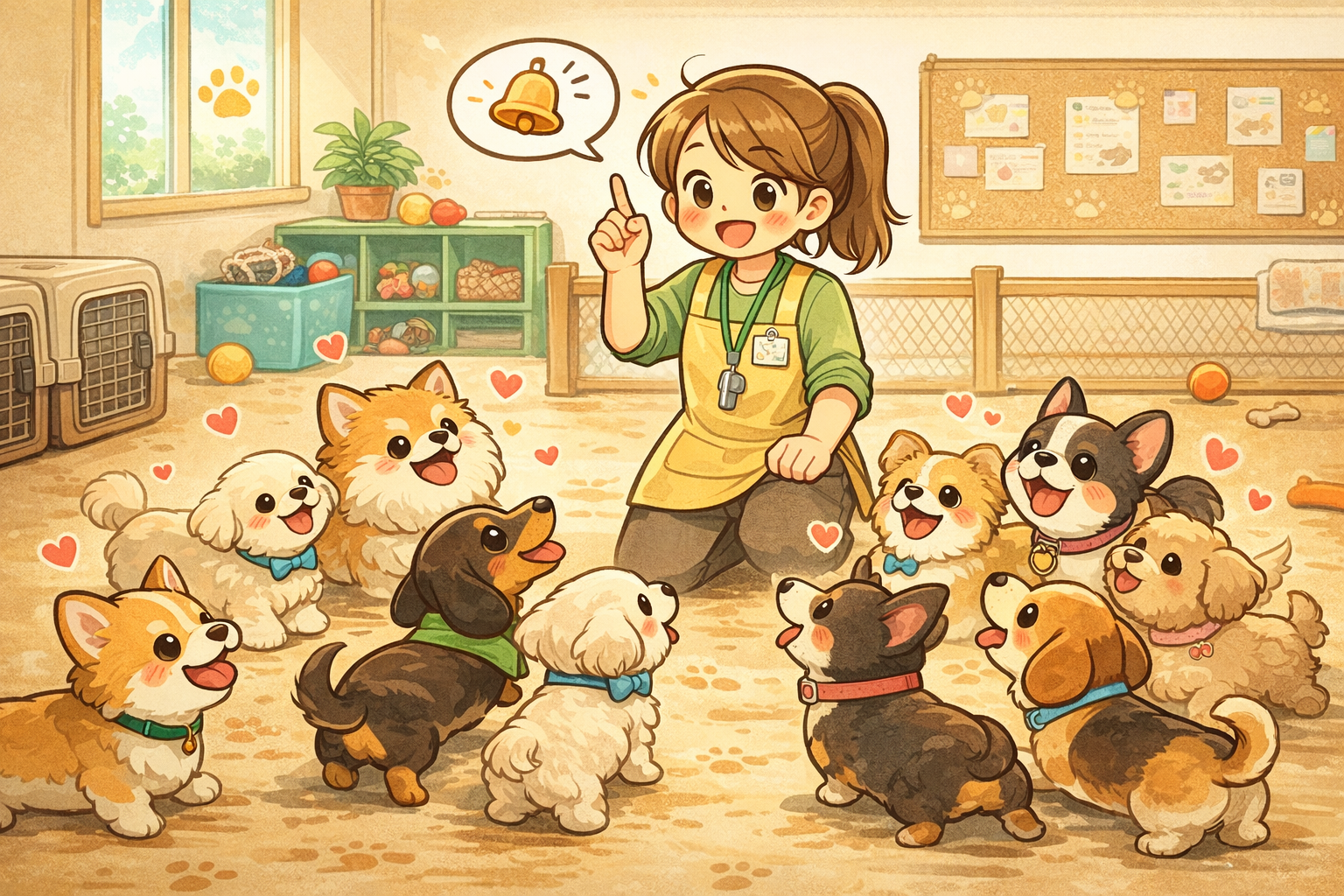
Some dogs enjoy well-managed group daycare. Others find the noise, constant proximity or long activity periods stressful. Attendance alone does not provide socialization or solve behavior problems. The right choice depends on the individual dog and the quality of care.
Look beyond tiredness
A dog sleeping deeply after daycare may simply have had a busy day, but exhaustion is not proof of enjoyment. Ask about relaxed rest, voluntary participation, play partners and how the dog responds when another dog wants a break. Watch for persistent avoidance, poor recovery or reluctance to enter.
Ask how the day is managed
- Are groups matched by behavior and play style, not only size?
- Are staff actively supervising and trained to interrupt conflict safely?
- Can a dog leave group play and rest undisturbed?
- Are meals and valuable items managed separately?
- What happens if a dog is frightened, unwell or repeatedly overwhelmed?
Request specific observations and, when possible, a short introductory visit. “They will get used to it” is not an adequate plan for repeated distress.
Consider alternatives
A quiet dog walker, sitter, individual activity or smaller compatible group may suit your dog better. Dogs with serious guarding, bite risk, medical needs or separation-related panic need individual assessment before entering a busy facility.
If daycare includes training, ask what is taught and how you will practice at home. Learning does not automatically transfer from one handler and environment to another. A useful service supports the dog’s welfare and your routine; it should not require every dog to become sociable in a large group.
Related guides
English edition rewritten on October 9, 2026.