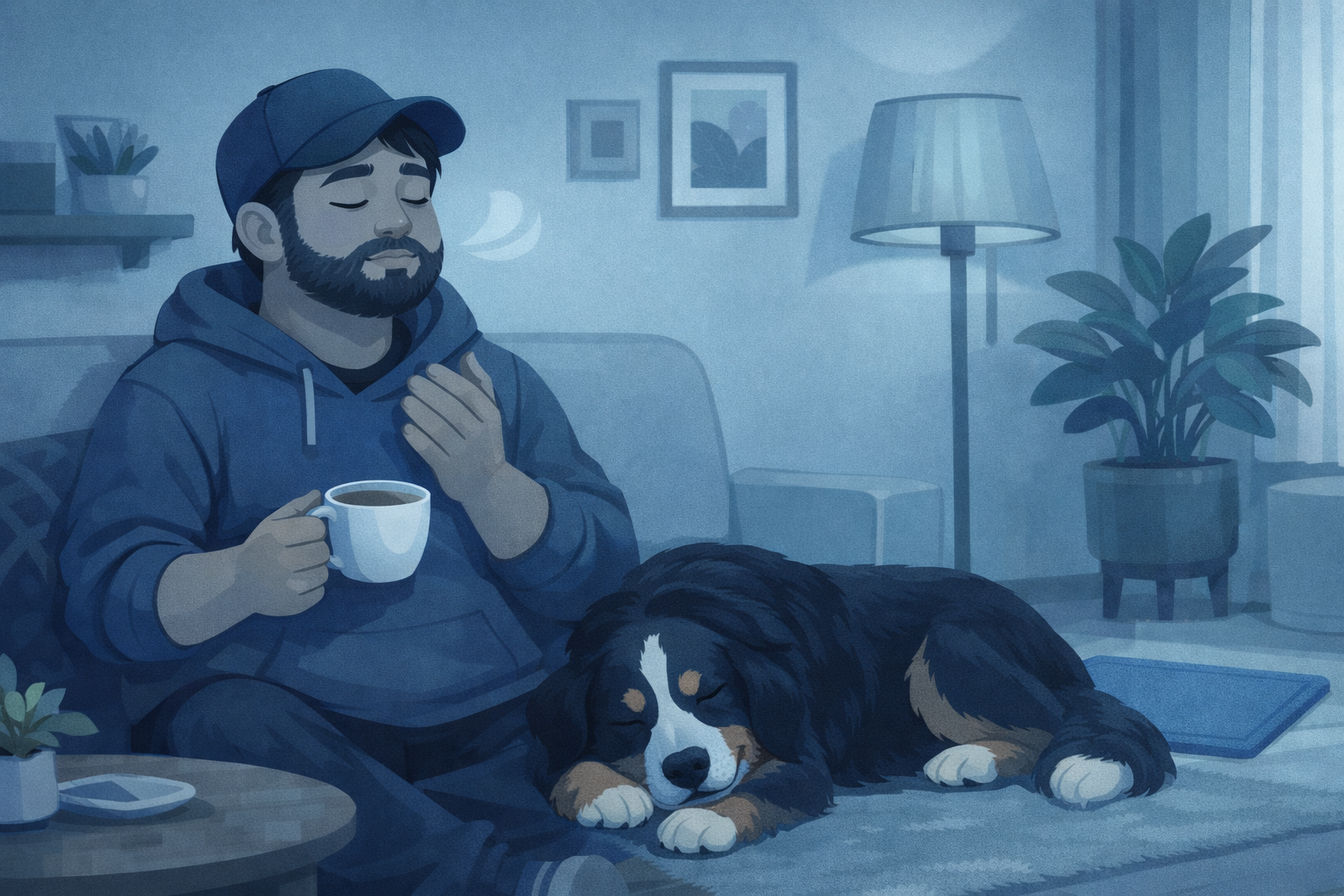
A stressful day can change how we move, speak and respond to a dog. Rushed walks, inconsistent reactions and less rest may make everyday interactions harder. This is a reason to simplify the routine, not evidence that every behavior problem comes from an owner’s emotions.
Notice the practical changes
Compare an easy day with a difficult one. Were meals delayed? Was the walk crowded? Did several people repeatedly interrupt the dog’s sleep? Describe these events rather than concluding that the dog absorbed your stress.
Dogs also have independent health and behavioral needs. Sudden agitation, appetite changes or discomfort should receive veterinary attention even if the household has been busy.
Create a low-effort fallback plan
- Keep essential meals, water, toilet opportunities and medication reliable.
- Choose a familiar quiet route when neither of you can manage a demanding outing.
- Use a safe food-search activity or appropriate chew for a short, supervised break.
- Provide a resting area that other people leave undisturbed.
- Ask a trusted caregiver for help before exhaustion turns every interaction into conflict.
Make responses predictable
Agree on one simple approach to jumping, barking or asking for attention. Reward an easy alternative before the situation escalates. If frustration rises, create safe separation and pause; physical punishment or a confrontation is unlikely to improve the relationship.
Keep a brief record of what helped you both recover. If daily life remains difficult, a qualified reward-based professional can help reduce the workload and identify priorities. The goal is a workable home routine, not perfect calm from either person or dog at every moment.
Related guides
English edition rewritten on October 9, 2026.