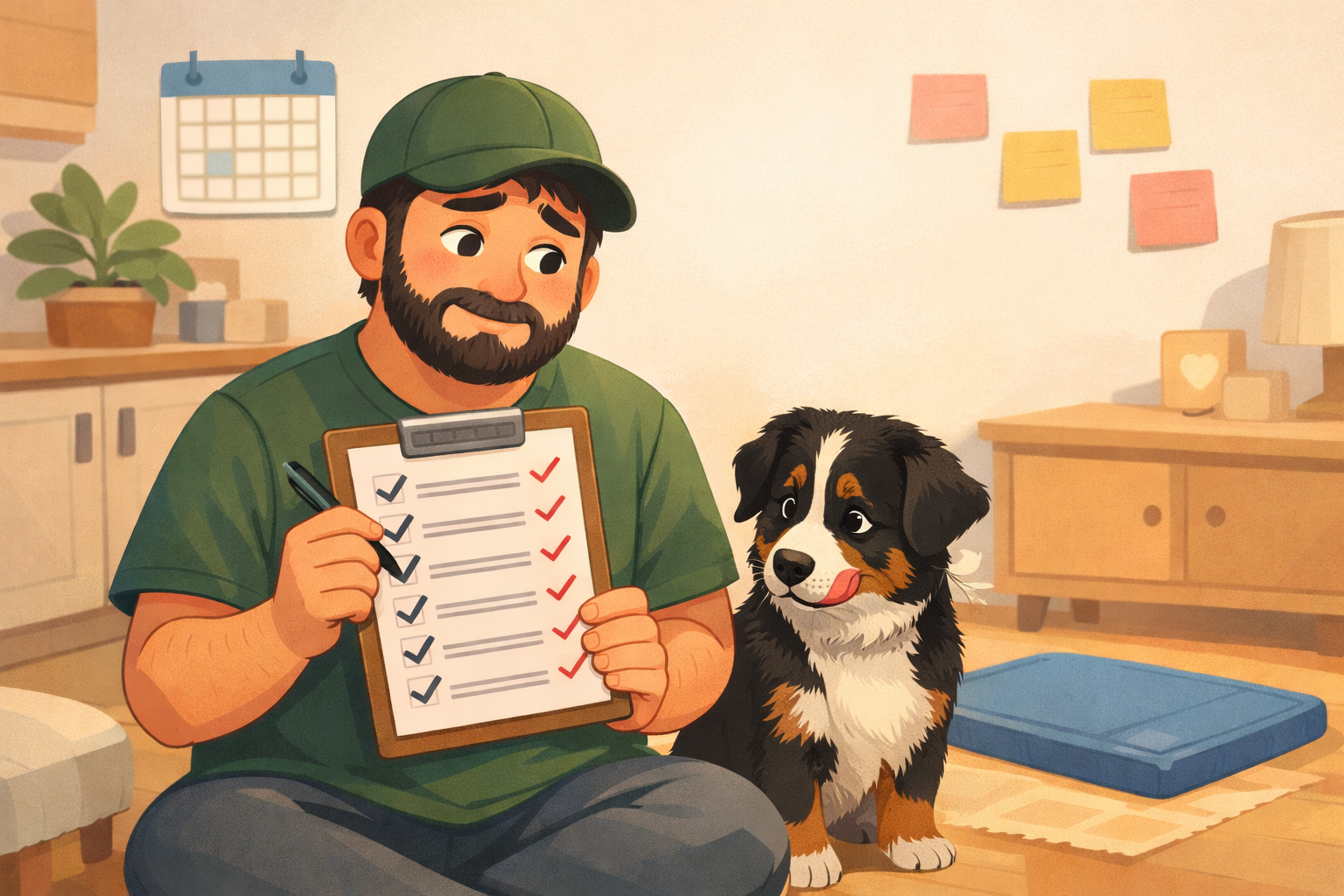
Good care is not measured by how many hours you spend issuing cues or how many products you buy. A dog needs reliable physical care, comfortable social contact and opportunities to behave normally. Constant attention can become tiring if the dog never gets to rest or choose distance.
Check the foundations
Provide suitable food, water, veterinary care, exercise, toileting and undisturbed sleep. Adapt these to age and health rather than copying another household’s schedule. A dog who is comfortable enough to rest and explore has a stronger foundation for learning.
Affection is not inherently spoiling. The important questions are whether the dog welcomes the contact and whether household responses are understandable.
Replace control with useful teaching
- Reward a calm greeting instead of repeatedly pushing the dog down.
- Provide suitable chewing materials and store unsafe objects away.
- Teach a mat as a comfortable option, not a place for enduring stressful visitors.
- Allow safe sniffing and exploration during walks.
- Pause handling when the dog shows discomfort and investigate the cause.
Allow independence without abandonment
A dog can learn to enjoy short independent activities while still receiving reassurance when needed. Build alone time gradually and observe behavior rather than assuming silence means comfort. Do not withhold necessary care to demonstrate that you are in charge.
Review the routine when either of you is struggling. A useful owner is willing to change the setup, ask for help and notice small improvements. The standard is a safe, sustainable relationship that meets the dog’s needs, not flawless obedience or a permanently happy-looking photograph.
Related guides
English edition rewritten on October 9, 2026.