Practical starting point
Agree on predictable toilet opportunities, meals, rest and handling routines, while remaining responsive to the dog's needs. Rules are not a reason to restrict drinking water, postpone urgent toileting or make a fearful dog endure contact. Reward an alternative action and manage access to hazards. Safety and welfare take priority over making the dog comply with a schedule.
Proper principles and rules for a dog-raising home
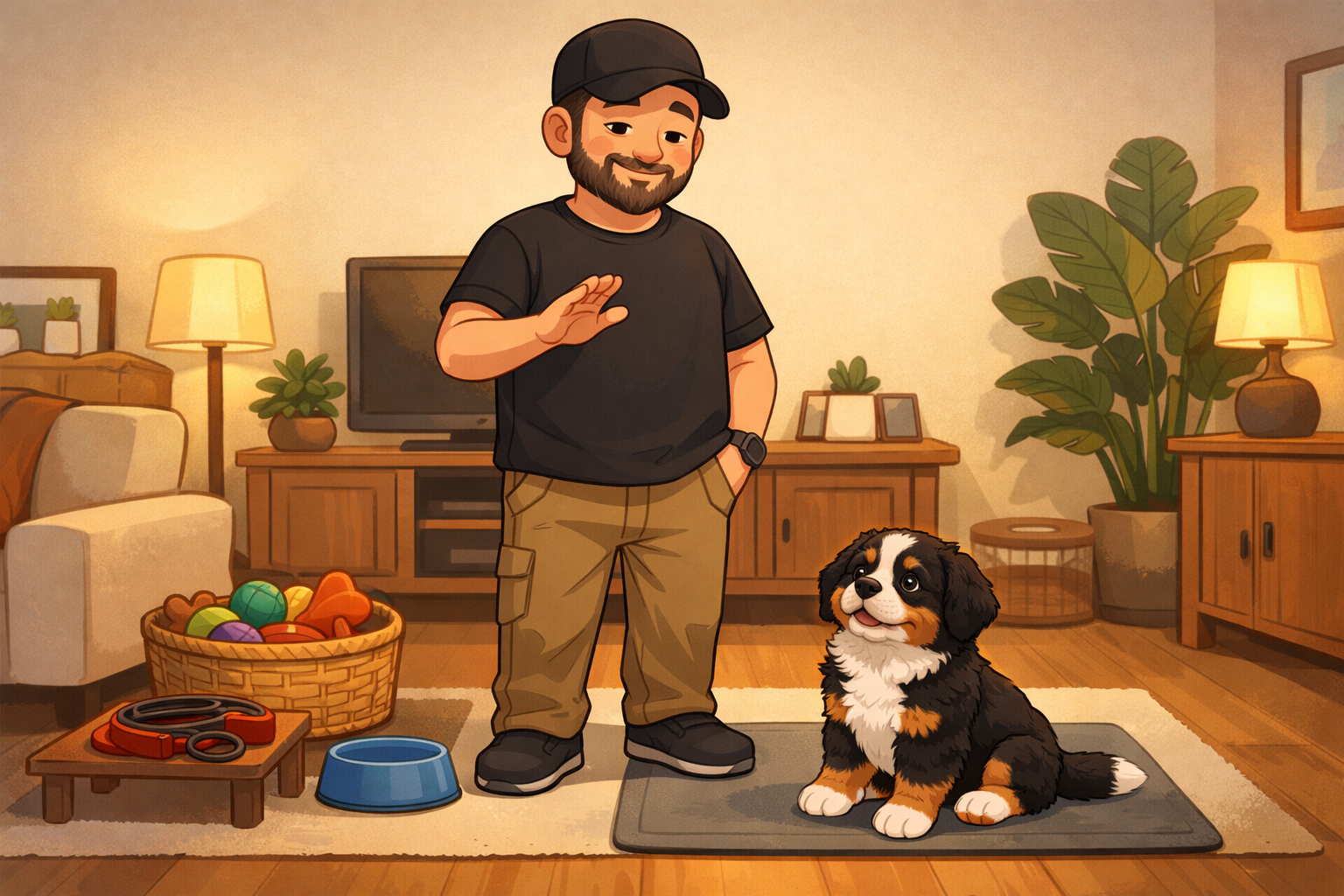
Hello. I’m a Saramgom trainer! In fact, this article is so important and core that it is also related to my work. So, if you just understand the contents of this article, most problems can be prevented, and people like me will have less work to do. Haha
To get straight to the point, the most important thing in a household raising a dog is not toys, treats, or unconditional pampering. There is one thing that I really feel a lot about on set. Most homes where dogs are stable have a guardian-led lifestyle. Conversely, problematic homes often have situations where the dog has to control the situation or make decisions.
Guardian leadership here does not mean coercive control. This means creating a structure in which the guardian sets the flow of life, and the dog rests, eats, walks, and learns predictably within it. If this is not caught, barking, excitement, separation anxiety, demanding behavior, and distraction are likely to repeat. On the contrary, if this standard is met, the dog will stabilize much faster and the guardian will be much more comfortable.
Important!!
Puppies do not become stable because they have a lot of freedom, but they become more comfortable with predictable rules and a guardian-led life.
1. Why is a guardian-led life the most important?
Many guardians say, “My dog is sensitive,” “He is stubborn,” and “He is too excited.” However, if you look closely at life, there are quite a few cases where dogs take the lead. They ask them to play when they want, they respond right away when they bark, they hug them when they whine, their meals and walks change depending on their mood, and they are continuously stimulated without a break.
If this kind of life is repeated, the dog does not become comfortable, but rather becomes more anxious. This is because the standard of living changes depending on one’s mood and momentary reaction. From a dog’s perspective, “when to rest, when to play, when to eat, and which behaviors work” are constantly fluctuating. This is more stressful than you think.
There is something I often say during consultations. “A home where the dog follows the guardian is stable, but a home where the guardian follows the dog’s reactions easily causes problems.” Only when the guardian sets the rhythm of life can the dog rest safely there.
To put it simply
“It may seem like the puppy will get better if it is cute and adjusted to it every time, but in reality, it often becomes more unstable. This does not mean that the guardian must be cool for the child to be comfortable, but that the guardian must set a standard for their life. It is difficult for a puppy to rest comfortably in a house where it can be done today but not tomorrow, and where the puppy listens when it barks and responds immediately when it whines.” For example, if you want to be liked, you should not be liked when you come and ask for something, but rather be liked when you call your name. Whether the behavior is led by the dog or the guardian is the difference of a single piece of paper.
2. The first rule that is essential in raising a dog: The guardian decides the beginning and end of life
If you feed your dog as soon as he wants, play with him right away, take him for a walk right away, and hug him right away, he can feel comfortable in the moment. However, in the long run, demanding behavior increases, excitement control becomes difficult, and dependency on caregivers increases. Therefore, the beginning and end of life must be determined by the guardian.
- Give food at a time set by the guardian, not when the puppy fusses
- Play does not start the moment the puppy attacks, but begins when the puppy becomes calm
- Do not go out for a walk immediately in an excited state, but stop for a moment
- Helps maintain rest by not continuing to react during rest periods
This rule is not intended to appear authoritative. It is a device that makes the dog feel, “Ah, the guardian is the leader in this house, so all you have to do is trust and follow the guardian!” From that moment on, your dog stops trying to solve everything on his own and his whole life becomes much calmer.
3. Examples of situations that actually occur often at home
3-1. Rice time
In many homes, dogs start spinning, barking, jumping, and making a fuss as soon as their food bowl is lifted. At this time, what is needed first rather than shouting “wait” is to organize the flow.
Real life examples
“Children who get excited in front of food often have accumulated experience of getting what they want through excitement, not because of the food. I always tell their guardians: If the child gets more upset when he/she receives food, don’t give it to him/her right away. Wait for 2 seconds when the child becomes quiet, 3 seconds when the child stops, or the moment when the child’s four feet are on the floor, and then put it down. The child gradually learns, ‘You have to be calm to get the food.’”
3-2. Front door before going out for a walk
When you enter the front door, there are many dogs that get excited and start running, barking, biting the leash, and making a fuss. If you open the door right away in this state, your puppy will learn faster. “When you’re excited, doors open.”
Real life examples
“Many children get excited at the front door because going for a walk is always a good thing. But if you go out right at that moment, you reinforce that excitement every day. The most realistic homework I give to guardians is simple: Pause for 5 seconds at the door. It doesn’t have to be until they sit down. At least pause for a moment and open the door when the leash loosens. That repetition reduces the front door excitement.”
3-3. A situation where someone brings a toy to play with
There are children who come with toys in their mouths, throw them, bark, hit them with their front paws, and keep asking for them. At this time, if you respond immediately every time that it is cute, the puppy will learn the required behavior before the play itself.
Real life examples
“It’s good to play, but you need to look at the way you ask for it as well. If you play at the moment of barking, running, and hitting with your front paw, the behavior will become more vivid. I tell the guardian, ‘Don’t ignore the toy, but adjust the timing.’ Don’t play right away, but start with a signal when the child pauses for a moment, when his eyes settle, or when he sits or moves away. Then, the child plays calmly, not with demands. Learn how to open.”
3-4. When guests arrive
When guests come, they often bark, jump excitedly, or hide in a corner. In this case, the first thing you need is not to force the dog to say hello. Be confident that you have a place and that your guardian is in control of the situation.
Real life examples
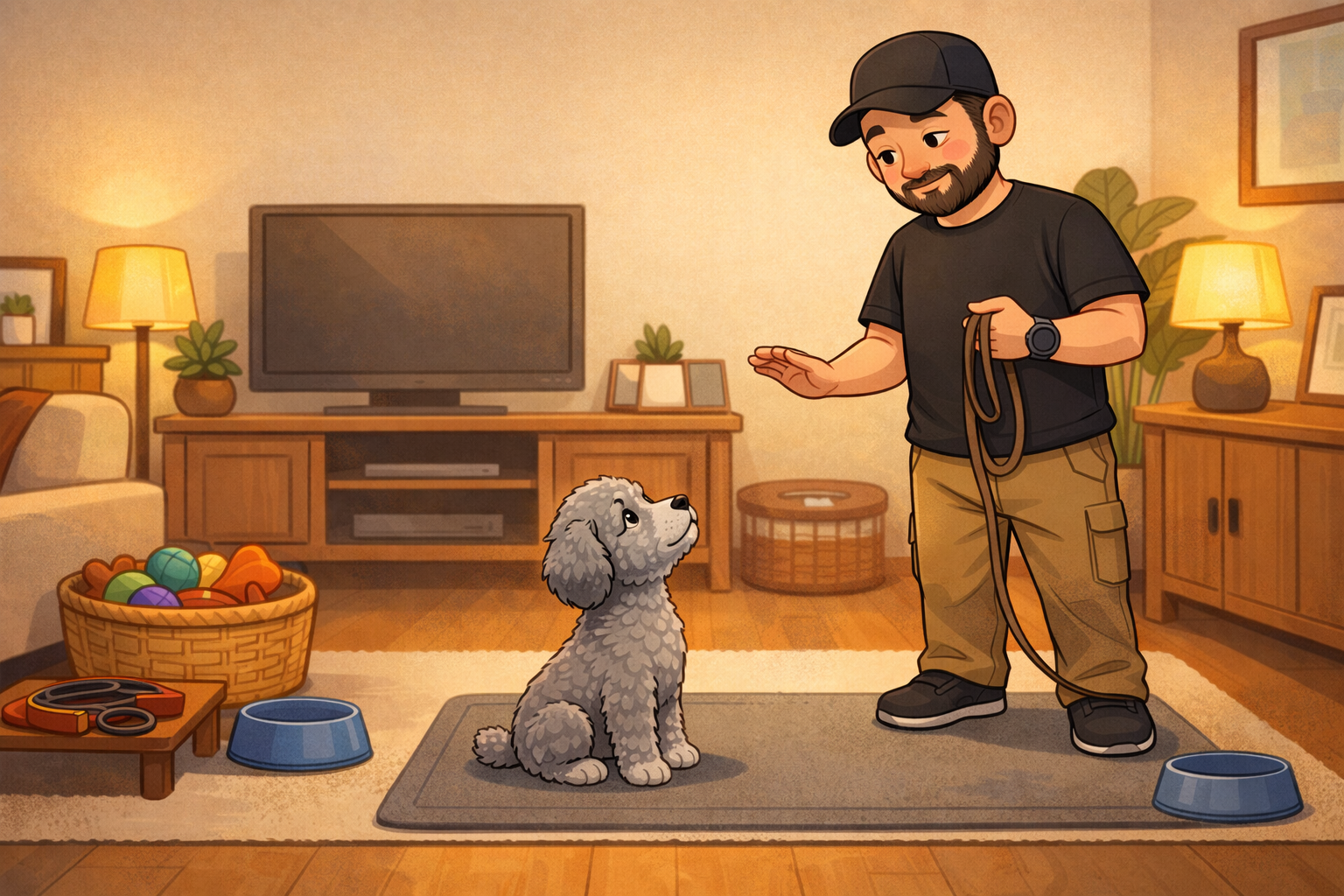
“Many homes require you to greet a guest when they arrive, but this often becomes more difficult. Whether the child is excited or scared, the first thing to do is send them to the mat or designated spot. And the guardian should respond to the guest first. If the dog tries to personally check and control the entire situation, he becomes more nervous. If he gets the feeling that ‘the guardian is in charge of this situation,’ he will calm down much faster.”
4. Key principles that must be followed when raising a dog
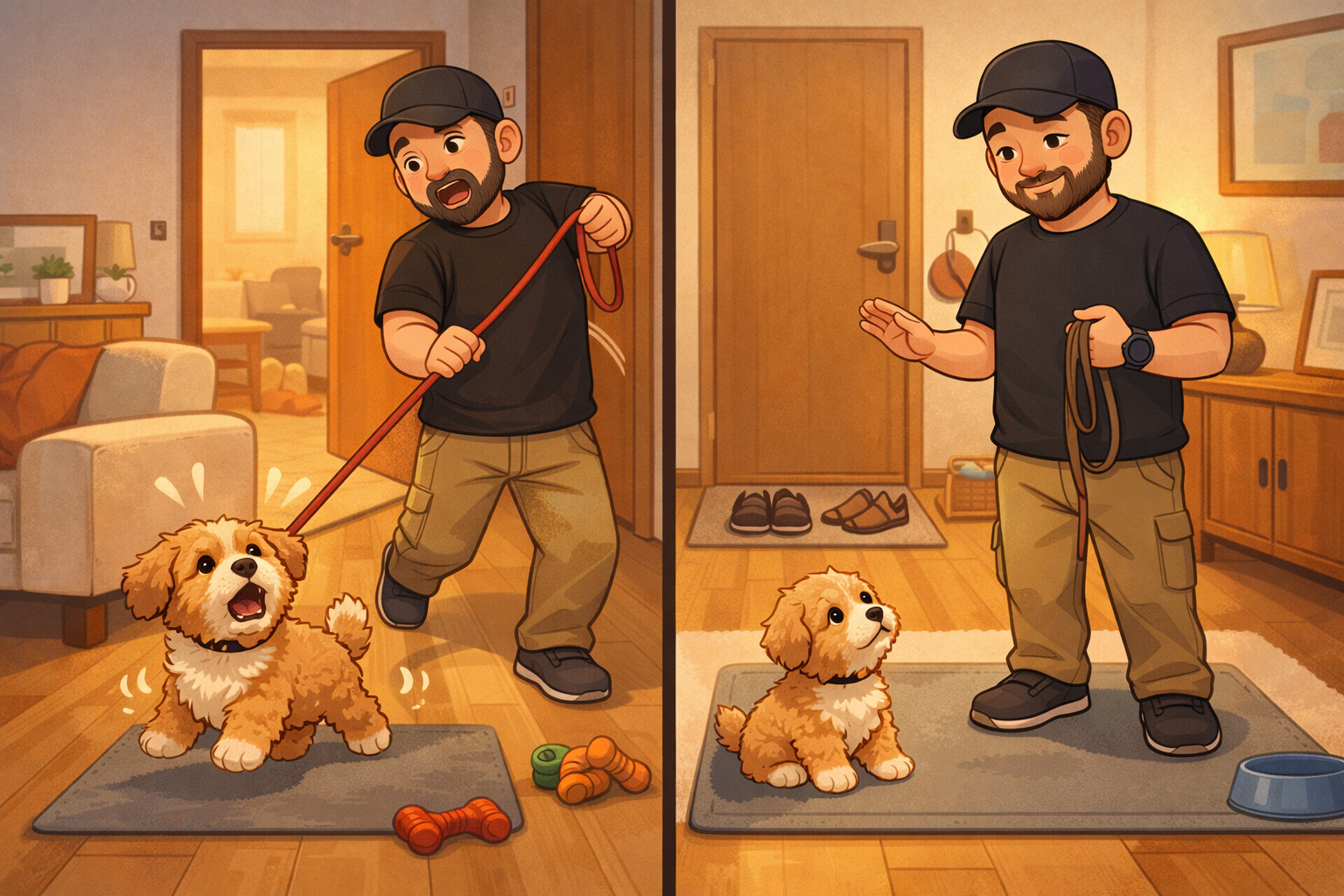
Principle 1. Guardians create a rhythm of life
It is better for the guardian to decide the main flow of eating, walking, playing, and resting. Predictable rules, rather than spontaneous reactions, make dogs more stable.
Principle 2. Look at the cause and environment before the problem behavior
Behaviors that look like barking, biting, jumping, or separation anxiety are often triggered by fatigue, lack of sleep, a sensitive environment, and inconsistent responses. Rather than just clicking on action, you need to look at your whole life.
Principle 3. Instead of telling people not to do something, tell them what to do
Puppies will learn faster if there are alternative behaviors, such as going to the mat instead of barking at the front door, and sitting and greeting people instead of running.
Principle 4. All family members use the same standards – Important!! (From a trainer’s perspective, what should I do when the elderly people are so pretty? This is the scariest thing.)
If someone tells you to put it up and someone tells you to put it down, your dog will continue to get confused. The family must first unify the rules for the sofa, bed, table, food, front door, and dealing with guests.
Principle 5. Make sure to take breaks
If a dog continues to play at home, receives constant responses, and receives constant attention, it can actually increase his/her sensitivity. You need a quiet place to rest and time without stimulation.
5. Life rules that are good to set if you are raising a dog
- Pause briefly in front of the door and then leave
- During mealtimes, people rest in their own seats without asking for food
- Just because you bark doesn’t give you what you want
- Play begins and ends with the guardian
- Excitement is followed by a time of calm
- Do not forcibly wake or touch someone while they are sleeping
- When guests arrive, the guardian first organizes the situation
- Everyone in the family responds to the same word and the same standard
- Give your dog a quiet place to rest
- Good behavior is immediately known and repeated
6. Areas frequently misunderstood by guardians
“If you give it a lot of love, it will become stable.”
Of course, love is important. However, love without standards can actually increase anxiety. Dogs do not live with emotions alone; they feel secure in the structure of their lives.
“Isn’t it good to be left free?”
A lot of freedom is not always good. In particular, children who are sensitive or excited become more comfortable when the standards are clearer.
“If you don’t scold them, will they become spoiled?”
What is more important than scolding is management and prevention. Changing the structure, teaching alternative behaviors, and reinforcing a calm state before problem behavior occurs will go much longer.
7. What I really want to say as a current trainer
A home that stabilizes dogs does not require a lot of special skills. It is a home where guardians are not impatient, standards are not shaken, and the flow of life is maintained steadily. In fact, if you look at houses where behavior has improved significantly, they have something in common. The dog does not live according to the emotions or spontaneous reactions of the guardian, but lives comfortably within the rhythm of life created by the guardian.
I always tell guardians. The saying that a dog needs leadership does not mean that you should push it. It means that it needs direction and calm control of the situation to keep it from being anxious, confused, and predictable. That is a guardian-led life.
If you organize it
The important principle of a dog-raising home is simple. Creating an environment where the guardian can control the flow of life, the family uses the same standards, and the dog can rest and be predictable. Once these three things are caught, barking, excitement, demanding behavior, and anxiety issues become much easier to deal with.
8. This article is especially necessary for these guardians
- If your dog is too sensitive or excited at home
- If barking, jumping, or demanding behavior becomes more severe
- If you are concerned about separation anxiety or are highly dependent on your guardian
- If the dog is more confused because each family member reacts differently
- If you are training, but the atmosphere at home is not well organized
Raising a dog well is closer to creating a standard for it to live comfortably than giving it a lot. Start setting some house rules starting today. Puppies learn stability much faster than you think. Let me add one thing here: A dog is like a dog. You should understand a puppy as a puppy, but if you think of it as a human child, many misunderstandings will arise.
If you apply it slowly and make it part of your daily routine as I mentioned, your life with your pet will be much more stable and happy in the future. If you have any questions or need consultation, please feel free to contact us at any time!!
Frequently Asked Questions
Q. Isn’t the guardian-led life too strict?
There is a difference between rigor and consistency. A guardian-led life is not a form of coercive control, but rather a way for the guardian to stabilize the flow of life.
Q. If your puppy keeps begging you to play, can’t you respond right away?
If you always respond immediately, your request behavior can become stronger. It is much more helpful to start play with a signal during a moment of calm.
Q. Do I need more rules to keep my dog safe?
You don’t need to have many rules. A few simple, consistent rules are much more effective. The important thing is for everyone in the family to follow it in the same way.
Related guides
English edition copyedited and supplemented on October 9, 2026.