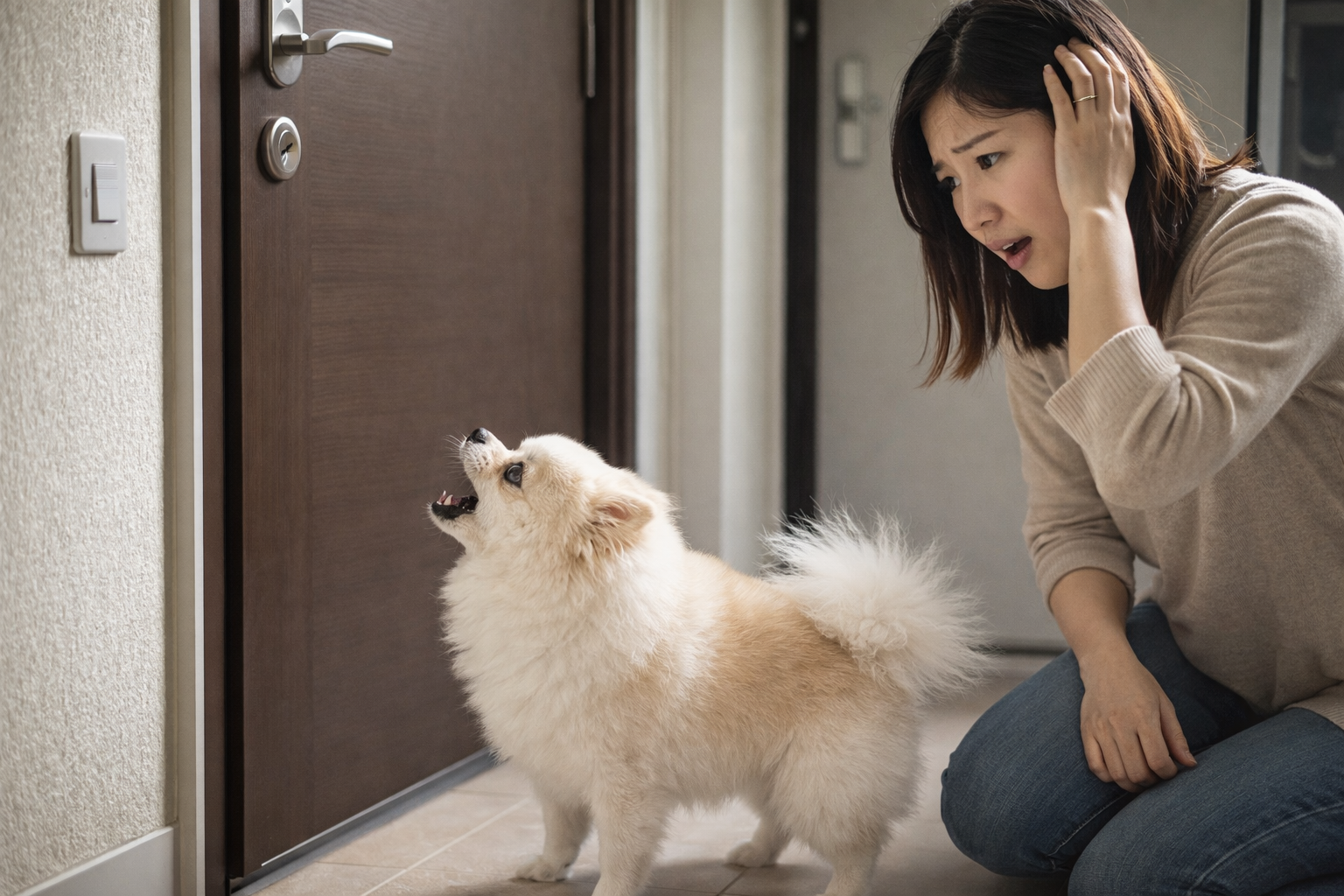
Footsteps, elevator sounds and deliveries can make an apartment entrance a busy listening post. Barking may be an alert, an excited expectation or a sign of worry. The first task is to reduce pressure at the doorway, not demand silence while the trigger continues inches away.
Change the setup
Move the resting area farther from the entrance if possible. Use safe visual barriers where outside movement is visible and arrange deliveries so the dog does not meet every visitor. A gate can prevent rushing the door, but should leave the dog a comfortable place to retreat.
Teach the routine before a real visitor
- Reward voluntary relaxation on a mat in a quiet moment.
- Practice walking to it together, then add a simple cue.
- Introduce a very mild door-related sound with a helper.
- Reward comfortable behavior and end before barking escalates.
If a sound produces frantic barking or freezing, reduce its intensity or increase distance. A dog unable to settle is not ready for a harder rehearsal.
During an actual delivery
Place the dog safely away from the entrance before opening it. Keep the interaction brief and do not require a greeting. Afterward, allow the dog to recover. Scolding from the doorway can add more noise and tension to the event.
Track the number of episodes, their duration and recovery. Improvement may mean a brief alert followed by settling, not complete silence. If the dog threatens visitors, redirects onto family members or remains distressed, use secure separation and seek qualified behavior support.
Related guides
English edition rewritten on October 9, 2026.