Hello guys. Today, we are trying to learn about the caraming signal that can read the current status mood of the dog based on the body and behavior of the dog. The whole content is based on Turid Rugaas’s “On Talking Terms With Dogs:Calming Signals” and the additional content is based on the Internet and several cases. It’s not cleaned by the caraming signal.
Caraming signal is a way to figure out the status of the puppy with a quiet signal gesture. But it is not exactly like a picture or a language of a person or any language that is always fixed.This caraming signal can not be used to be absolute to the current appearance, and we will inform you that you are important in the front and back situation.
1. Facial licking (Licking own nose) –When the dog is insufficient or tensioned, it is often used when sending signals that are not threatened.
2. Yawning –When you are trying to relieve stress or tension, it can also be a try to loose the surrounding tension. It is also a signal that is tensioning.
3. Blinking or averting eyes –The direct line can be threatened, so avoiding the sprint or flashing the eyes indicates that there is no intention of the attack.
4. Coat (Licking nose) –You can feel anxiety or tension, and deliver a doctor that will calm or peacefully act to others or people.
5. Turning away –It is a non-lingual signal that is used when you want to show that it is not aggressive or leave the situation.
6. Sniffing (Sniffing) –When you want to turn your attention to another, or avoid the current situation, you can distort your nose and leave your surroundings. No matter how much you do, we recommend that you do not follow the action.
7. Lowering the body –It is used to relieve the tension of the surroundings, making it small and not threatening. It is also applicable if you fall down and evacuate the situation.
8. Slow tail wagging –Tail shakers are always not crucial, and can lead to tension or anxiety in accordance with the situation. In particular, when the tail shakes fast and low, it can lead to anxiety. When the tail is shaken, it also contains the meaning of the bounds. The tail can express anxiety or tension, and it can be used as a reminder of the bounds rather than a friendship.
9. Bending (Crouching) –Making your body a little bit of self is an indispensable behavior that seeks to protect yourself in stress situations.
10. Soft barking –It’s a way to know that it’s not the intention of the attack while it’s bound to the nearby.
11. Back-up stroke (Backing up) –When you want to leave the situation, or it is used to indicate that it is not a threat.
12. Play Bow –The back legs are used as a signal that bends the front legs and relieves tension while expressing the doctor you want to play with the posture that lowers the body.
13. The Tail –The action that hides the tail between the legs is very uneasy or fearful. This is not intended for the puppy, but if you see that it is 100% afraid of action, such as conditional reflection.
14. The ear back (Ears back) –To keep your ears back, you can see when it is attacked, and it is a racial attitude, and it will appear when it is insufficient.
15. Fast blinking –The behavior that flashes the eyes quickly is used to reduce anxiety and relieve the tension of the situation. It is often possible to see when it is common.
16. Tensioned correction (Tense facial expression) –When the mouth is tensioned and the eyes are large, it is a correction that appears when it feels anxiety or fearing. If you look at the eyes, it will not be forceful, but it will look like a tremendous.
17. Body weight –When you are in the middle of the bridge, you will be able to change your posture, or transfer your weight to one leg, indicating discomfort or anxiety, and you will notice that it is bound around.
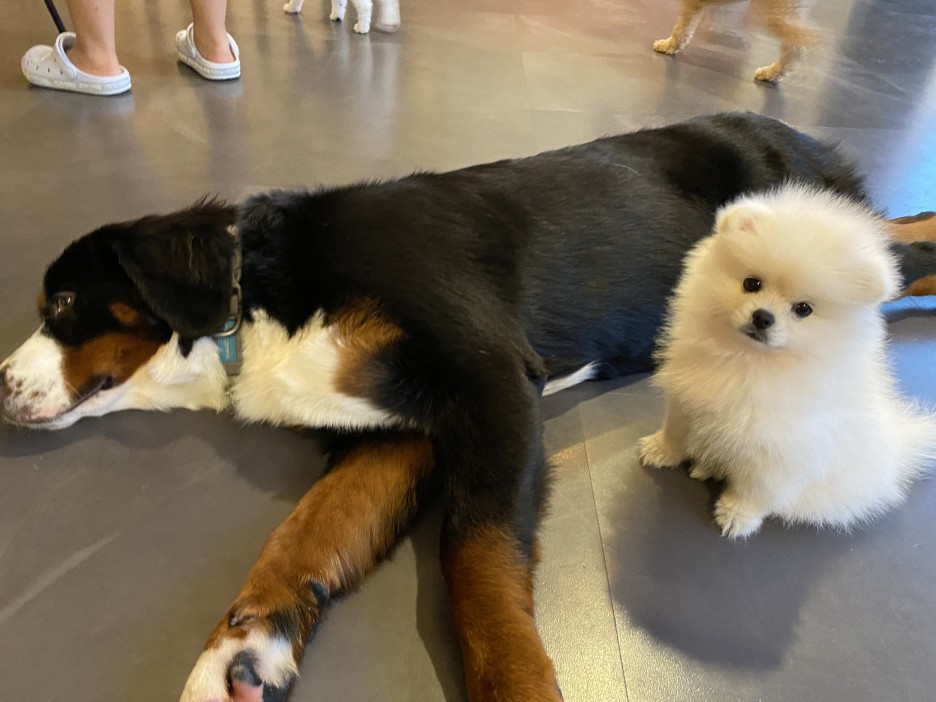
18. Seating or lying down –When the situation is nervous or anxiety, sits or pushes, indicating that it is not aggressive. This helps to stabilize other dogs or people.
19. The Neck –The action to show the neck is the expression of extreme confusion and trust, and there is a purpose to show the opponent who does not have a threat. It is the act of stretching the neck while squeezing down.
20. Binding in circles –When you are uneasy or excited, you can turn your glacial ice to see the intention that you want to calm and stress around. This action is also used to express yourself, by feedbacking the reactions that sometimes the hyperadhesive is deprecated by the guardian.
21. Lowering the head –It is used to show the behavior of the head, and there is no aggressive intention to the other. You will see that your friends who do not have their heads low and they are in the corner.
22. Soliciting grooming –The action that demands other dogs is used to strengthen social bonds and relieve tension. This enhances the trust and comfort of each other.
23. Run like bullet (Zoomies or frantic random activity periods) –The action that starts to run suddenly quickly can appear as a reaction to the surrounding environment, as a result of stress or excess energy. It is often done when the puppy is often. It is a behavior that is adversely referred to as the beacons.
24. Ears forward –In the future, it is a behavior that expresses the attention of the surroundings, and looks at the indispensable interests.
25. Scratching at the ears –When stressed or anxiety, some dogs are also likely to see a scratching behavior. This can be a way to try self-stable.
26. Frequent blinking frequentlyThe eyes often blinking can appear as an intention to relieve tension, which can act as a signal that pulls tension to the conversational opponent.
27. One leg lifting (Lifting one paw) –The action of lifting one leg indicates unstableness or storm, which shows that it is not completely comfortable in the current situation. It also appears when you are not tired.
28. The Head –It is a behavior that indicates a sympathetic interest while making heads look curiosity. This can be used as a part of communication that is listening to others or people. It also appears when you understand what words.
29. Scratching the ground –Scratching the floor can be indicated, it may appear when it is inconsistent or stressed. This action may be a part of the attempts to adjust the surroundings. It may be an attempt to calm the place in the battle.
30. Crossed posture (Standing at an angle) –In order to make a difference between the elderly and the elderly, the elderly and the elderly, the elderly and the elderly, the elderly and the elderly, the elderly, the elderly.
31. Rubbing –The behavior of the body to other dogs and people is used to promote intimacy, and relieve tension. If you are a friend, you will be able to take it.
32. Glazing (Spinning) –In stress or excess excitation, you can turn your self into ice. This can help relieve tension and calm yourself. You don’t know the difference between the stone and the stone.
33. Ear Pearl (Fluttering ears) –It is possible to move the ears frequently, and it can be a signal of boundary or tension around.
34. Winking –The wings of action is a relatively rare form of caraming signal that relieves tension and attempts to sympathetic communications.
35. Body contact required (Seeking physical contact) –It is a behavior that needs physical contact to others or people who want to look for a stable sense. This can be observed when it feels anxiety.
36. Exposing the belly –It is a sign of solitude and trust, and it also has the purpose of mitigating tension at the same time that indicates that it is not a threat. It is not a must. Caught friends are also exposed to boats for the situation evacuation. If you touch, you can also get to get to get to the hood.
37. Body temperature control action (Panting) –Although dogs may be better, they may appear when they are stressed. This may be a behavior that attempts body temperature control in a stressed situation. The breathing is good to be calm.
38. Soft barking –You can use the sound that gently crys are not attacked while you are bound around.
39. Cow and Face Scratching (Scratching nose and face) –The behavior of scratching the nose or face may be a lot of discomfort or anxiety, and it may be a try to stabilize yourself. It is not similar to the age. It is often possible to see when it is a confusion.
40. Sideways Walking –Walking directly without rushing, is used when you want to feel the tension with the other side, indicating that the person is inevitable.
41. Low-pitched barking –The barking with low tone is a non-invasive communication method that has not been warned. This can indicate the intention of maintaining more peaceful and stable situations.
42. Submissive postures –Lowering the body, hiding the tail, and exposeing the neckline appears in a sequential posture, avoiding the conflict and keeping the peace. There are also many cases that mean the sequential absence.
43. Roll in grass or dirt –The behavior that burns the body in the grass or earth can be used to relieve tension and calm yourself. This can also reduce tension in interactions with other dogs as social act. Because it is good for tension, there are many liked friends. People like massage or are the same.
44. The head between the legs (Pushing head) –The action that pushes the head between the legs can appear when seeking protection, looking for a stable sense. This can be a clear signal that indicates anxiety or fear.
45. Eye-catching Avoiding eye contact –It does not stand out the eyes, and it is used when the dog does not want to threaten the opponent, making the situation more peaceful.
46. Governing Law (Pacifying behaviors) –In the case of a dog, it is necessary to make a mouth without having to hear, and it is necessary to find a stable sense of stamina.
47. Twitching of small muscles –As one of the above palating behaviors, small muscles can be swelled in an indispensable situation, which can be physical representation of tension or stress. It looks like less pulling.
48. A quiet whining sound (Soft whining) –A quiet sound appears when you want to draw attention around while indicating anxiety or discomfort. This is often observed when dogs want to save protection or stabilization. If you are in mind, you can also change it to your needs.
49. Head backwards –The action behind the head is used when the opponent looks in a non-complex posture. This can often be interpreted as an intention to soften interaction by encouraging the ears.
50. Sitting up after jumping (Jumping followed by sitting) –After jumping in an excitation state, the action that sits right can be seen with a try to relax and calm the situation. This is not even seen.
51. Pointing –It is mainly a behavior that is seen from hunting dogs, but it can be interpreted as an intention that wants to make the subject of interest clearly. It is necessary to be a main action to the target of the attack.
52. Quickly opening the mouth –The action that suddenly gets a mouth can be a natural defense reaction of the body that wants to react quickly in tension situations.
53. Soft Mouthing –The behavior that is usually wrapped in the hands or other physical areas of the opponent is mainly used in the socialization process, expressing intimacy and inducing interactions. If the dog does not properly control, it is a factor that harassss the guardian.
54. Sudden stopping –When you are in the event of a sudden disruption, it appears when you want to evaluate the surroundings in an uneasy or unexplored situation.
55. Smiling –Some dogs are when they pull the lips behind and do the action that looks like building the ‘beauty’. This can be interpreted as an intention to relieve tension and show a friendship.
56. Burrowing –When you are uneasy or fearing, you can see the behavior of pods in narrow spaces like duvets or sofas. This is a behavior to find a feel that is safe and protected.
57. Scratching Neck (Neck scratching) –Scratching the neck area can be used in a way for discomfort or stress relief. This can often be seen as a act that attempts to stabilize.
58. Fluttering –It can be a part of the effort to break or break the body and stabilize yourself.
59, Tail wagging while approaching –The act that shakes the tail, refers to a relatively and peaceful intention, but can also indicate the excitement status. It can be interpreted differently depending on the angle and the largely fast commonness.
There are many things that are meaningful and we’ve found a lot of things to know as much as possible. But it’s not true that the caraming signal is not. There are friends that have a feeling of radical change, and you’ll find exactly what you need to know before and after the situation and the history of your friend. It’s never for me! I’m going to study again.
I don’t know who is a huge long posting, but thanks!!!
