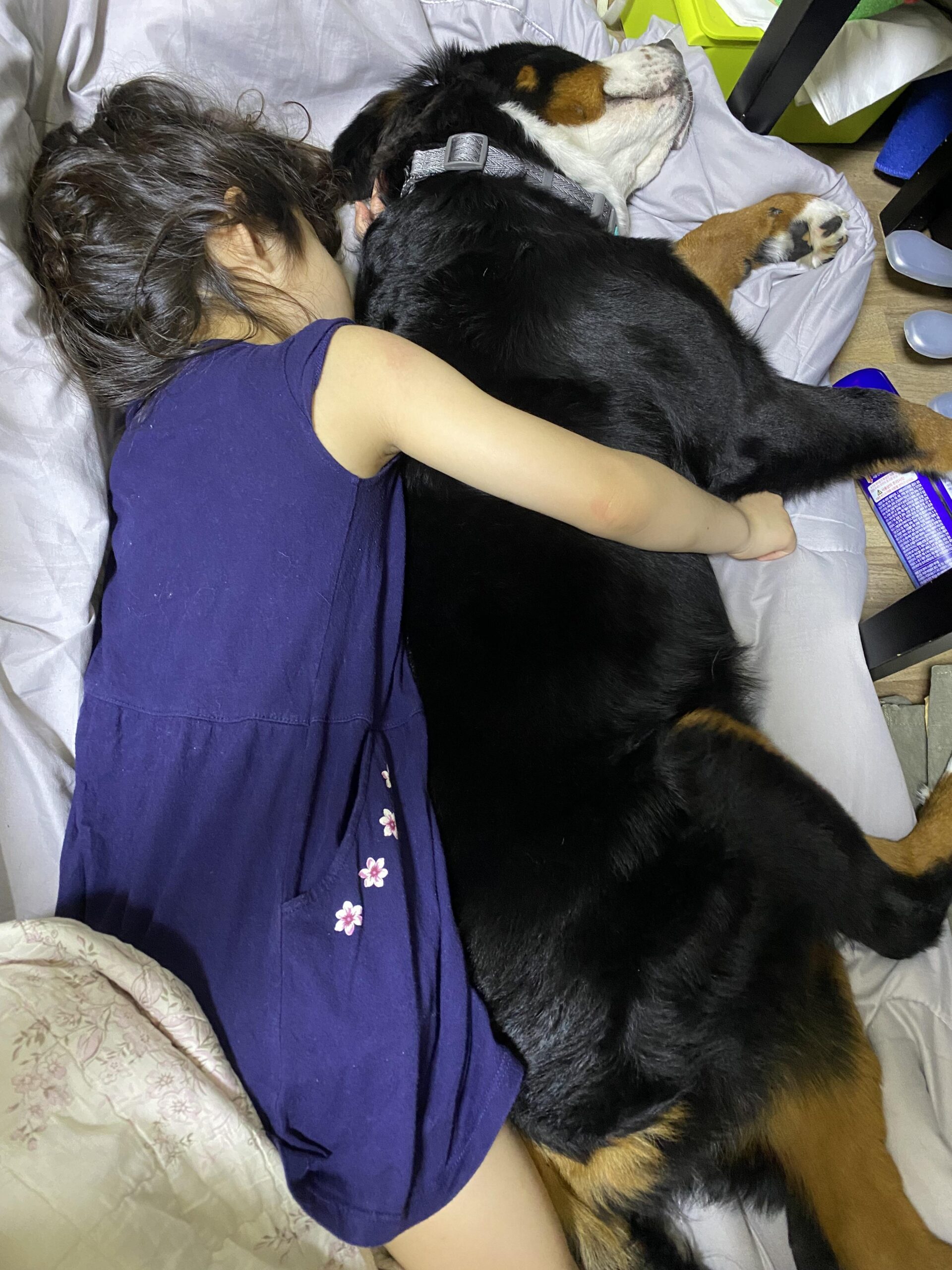
Living with a dog can be rewarding for a family, but it also brings risks and work. Young children move unpredictably, and dogs may find grabbing, noise or interrupted rest difficult. Planning for these realities is more useful than assuming affection prevents accidents.
Supervision must be active
An adult should be close enough and attentive enough to intervene early. When that is not possible, use suitable barriers and separate safe spaces. Do not leave a young child responsible for controlling a dog, even one who has always seemed gentle.
Protect vulnerable moments
- Leave dogs alone while eating, sleeping or chewing.
- Do not allow climbing, hugging, face-to-face contact or tail pulling.
- Keep exciting chase games controlled and appropriate.
- Give the dog a retreat children cannot follow them into.
- Keep children’s toys and dog chews separate to reduce conflict.
Be realistic about care
Adults remain responsible for exercise, feeding, training, veterinary care and cleanup. A child’s enthusiasm may vary, and a dog should not lose essential care as a lesson in responsibility. Discuss allergies, household space and the financial workload before adoption.
Take warnings seriously
Turning away, freezing, hiding or growling means the interaction needs to stop or change. Do not punish the dog for communicating discomfort or ask the child to repeat the interaction for a video. Seek qualified help after a bite or escalating tension. If someone is injured, obtain appropriate medical care. Safety depends on the environment and adult decisions, not on expecting perfect behavior from either child or dog.
Related guides
English edition rewritten on October 9, 2026.