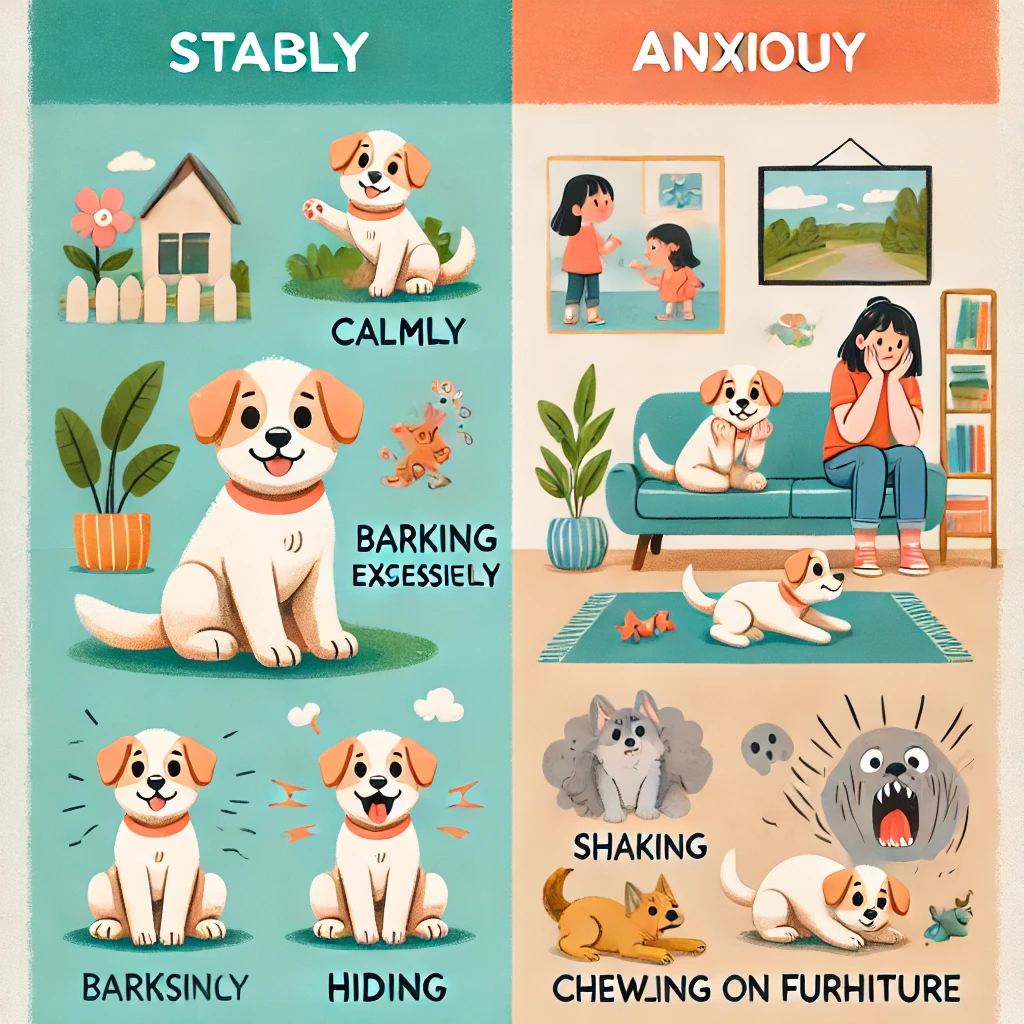
It is natural to wonder what a dog thinks when they watch you, turn away or follow you around. We cannot translate every movement into an exact sentence. We can, however, use context and repeated observations to respond more thoughtfully.
Describe before interpreting
Instead of “he feels guilty,” write “he lowered his body when I approached the torn cushion.” The dog may be responding to your tone or movement, and the posture does not prove understanding of an earlier mistake. Similarly, following you may reflect habit, interest, a need or unease.
Look at the whole situation
- What happened just beforehand?
- Is the body loose or tense, and can the dog move away?
- What does the dog do after you change distance or stop touching?
- Is this normal for the dog, or a recent change?
A wagging tail does not guarantee friendliness, and a quiet dog is not necessarily relaxed. Interpret clusters of signals rather than one feature.
Turn uncertainty into a helpful response
Offer a choice, reduce pressure and watch what happens. If the dog leans away from petting, pause. If they voluntarily return with a relaxed body, brief contact may be welcome. If they leave, respect that choice.
For new agitation, withdrawal or sensitivity to touch, consider health as well as emotion. A veterinarian or qualified behavior professional can help when patterns are persistent or unsafe. You do not need to know every thought to provide predictable care and respond to discomfort.
Related guides
English edition rewritten on October 9, 2026.