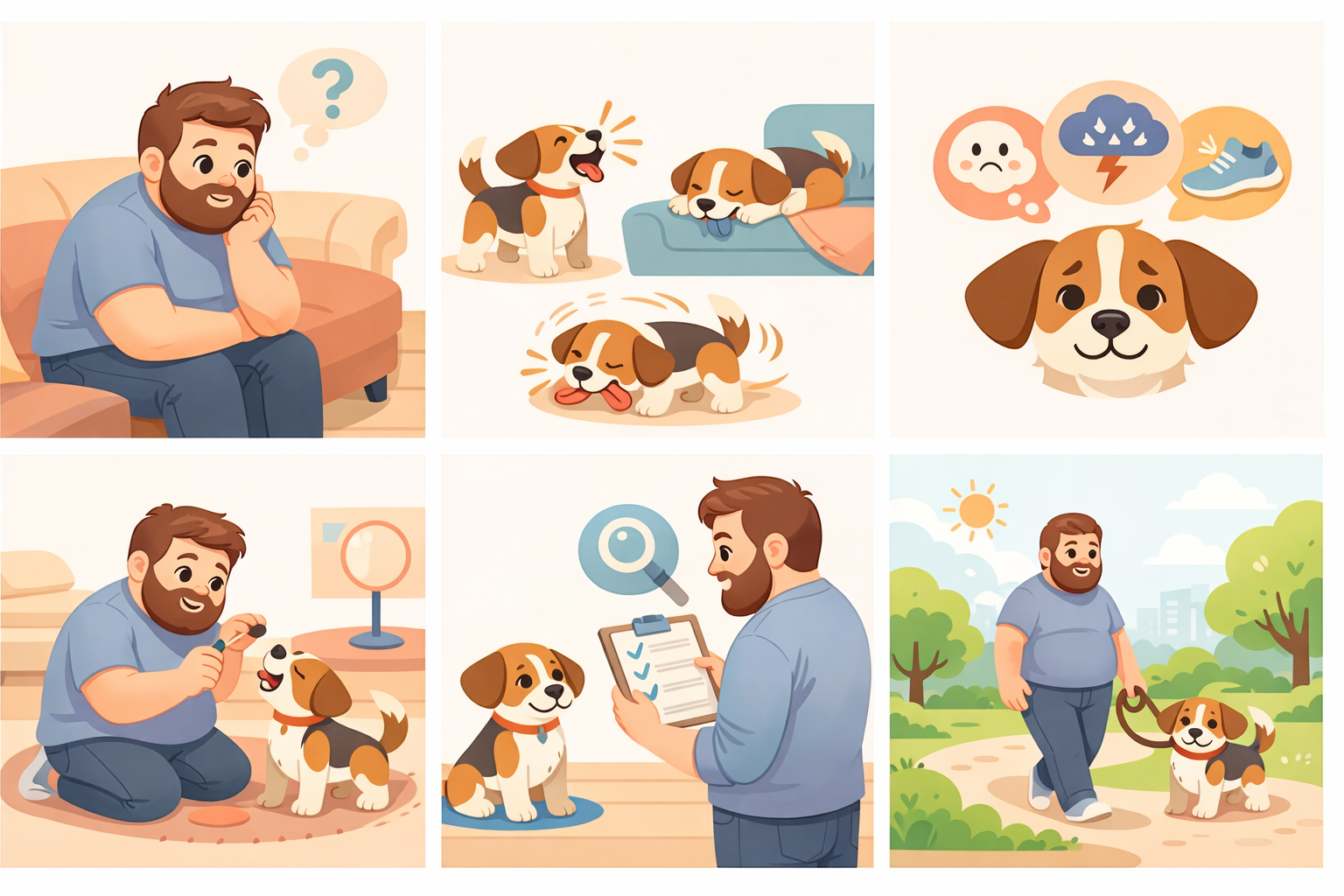
A dog who barks, licks or follows you is giving information, but the movement does not have one fixed translation. The same behavior can occur during play, anticipation, fear or discomfort. Understanding starts with a description of the situation rather than a story about what the dog must be thinking.
Use a three-part record
Write down what happened immediately before the behavior, what the dog actually did, and what happened afterward. For example: the doorbell rang; the dog ran to the entrance and barked; a visitor entered and reached toward the dog. This is more useful than “the dog was jealous.”
Include distance, body tension, movement and recovery. A loose body and easy disengagement differ from freezing, hiding or a fixed stare.
Test a low-risk change
- Choose one predictable situation.
- Reduce the difficulty through distance, quieter surroundings or a barrier.
- Offer a familiar alternative the dog can perform comfortably.
- Record whether the dog becomes more relaxed, not just quieter.
If the change helps, repeat it before adding complexity. Avoid provoking the behavior to confirm your theory, particularly when growling or biting is involved.
Keep other explanations open
Illness, pain, fatigue and sensory changes can affect behavior. Sudden or persistent changes deserve veterinary advice. A trainer can help analyze learning and environment, but should not diagnose a medical condition from a short video. Good interpretation remains open to new evidence and leads to safer, more comfortable daily life.
Related guides
English edition rewritten on October 9, 2026.