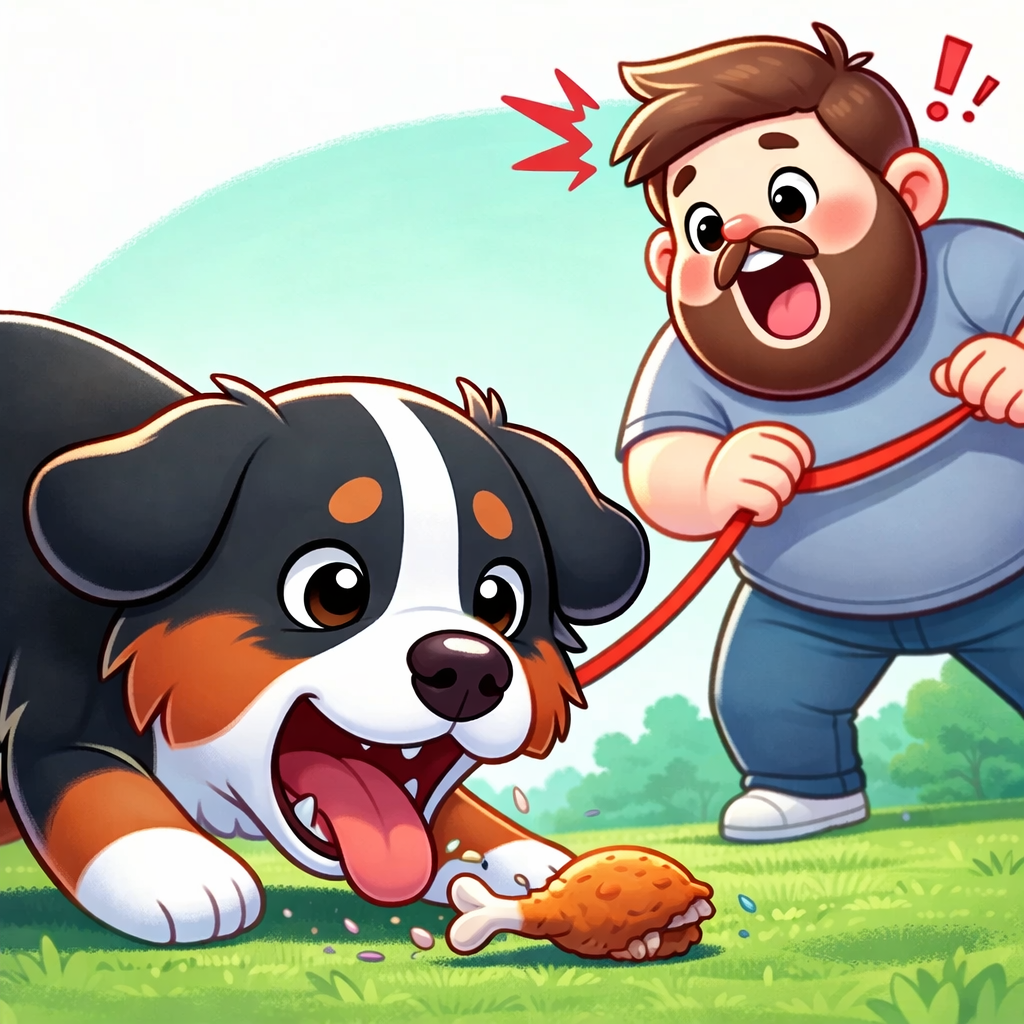
Food scraps and interesting objects can be powerful rewards on a walk. A dog who grabs them is not necessarily lacking respect. Repeated chasing or forced removal may make the dog swallow quickly or guard what they find, so prevention and easy practice are important.
Make the route safer
Scan ahead, avoid rubbish hotspots and keep a comfortable lead distance that prevents access to hazards. Reward checking in before the dog reaches an object. Allow safe sniffing elsewhere so the whole walk does not become repeated interruption.
For persistent scavenging, a properly fitted basket muzzle introduced gradually may add protection. It must allow panting and drinking, and it does not replace supervision or a medical assessment of unusual eating behavior.
Teach exchanges at home
- Start with a safe, low-value toy when the dog is relaxed.
- Offer a reward the dog prefers without reaching into the mouth.
- Mark the voluntary release and retrieve the toy only when safe.
- Return a safe toy sometimes so releasing does not always end the fun.
Add a release cue after the easy exchange is predictable. If the dog stiffens or guards, stop and seek qualified help.
If something dangerous is swallowed
Contact a veterinarian promptly and describe the object, likely amount and time. Keep packaging or a photograph if available. Do not induce vomiting, give home remedies or wait for symptoms without professional advice. A dog struggling to breathe needs emergency care. Training can reduce future risk, but an ingestion incident is not the time to test obedience.
Related guides
English edition rewritten on October 9, 2026.