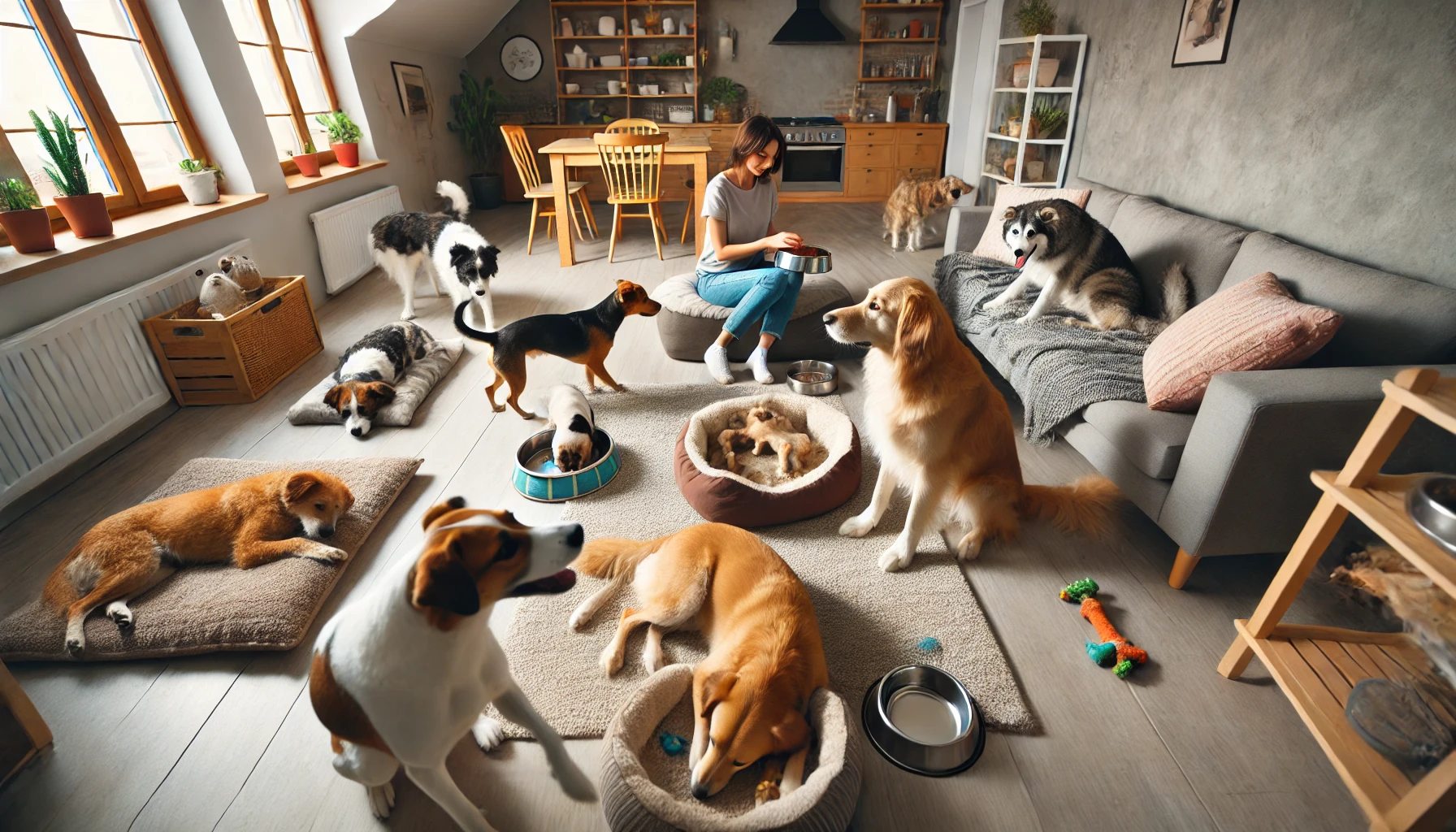
Dogs in one home develop patterns around space, food and social contact, but a fixed ranking chart is not a reliable household management plan. Supporting one dog by making another give way can create unnecessary conflict. Focus on what each dog needs to feel safe.
Separate valuable resources
Feed dogs in separate spaces and manage chews or highly valued toys carefully. Provide several resting places and easy routes through the home. One dog silently blocking a doorway or hovering near another dog’s bowl can matter even when there is no growling.
Watch early tension
Notice freezing, avoidance, hard staring, repeated displacement from beds or one-sided chasing. Interrupt low-level pressure by creating space before conflict escalates. Do not force dogs to share, punish warning signals or let them fight to establish order.
Build individual skills
- Teach each dog a comfortable station separately.
- Practice name recognition and coming away from mild distractions.
- Reward relaxed parallel activity at an appropriate distance.
- Provide individual walks, play and rest as needed.
Training together is easier after each dog understands the task alone. Avoid creating competition by handing out food between dogs who already guard.
When safety requires a different plan
After a fight, separate securely and arrange veterinary care for injuries. Do not put hands between fighting dogs or assume the next encounter will be harmless. Repeated threats, bites or inability to relax around one another calls for qualified professional assessment. Some households need long-term separation or a different living arrangement; safety matters more than the ideal that every dog must become a friend.
Related guides
English edition rewritten on October 9, 2026.