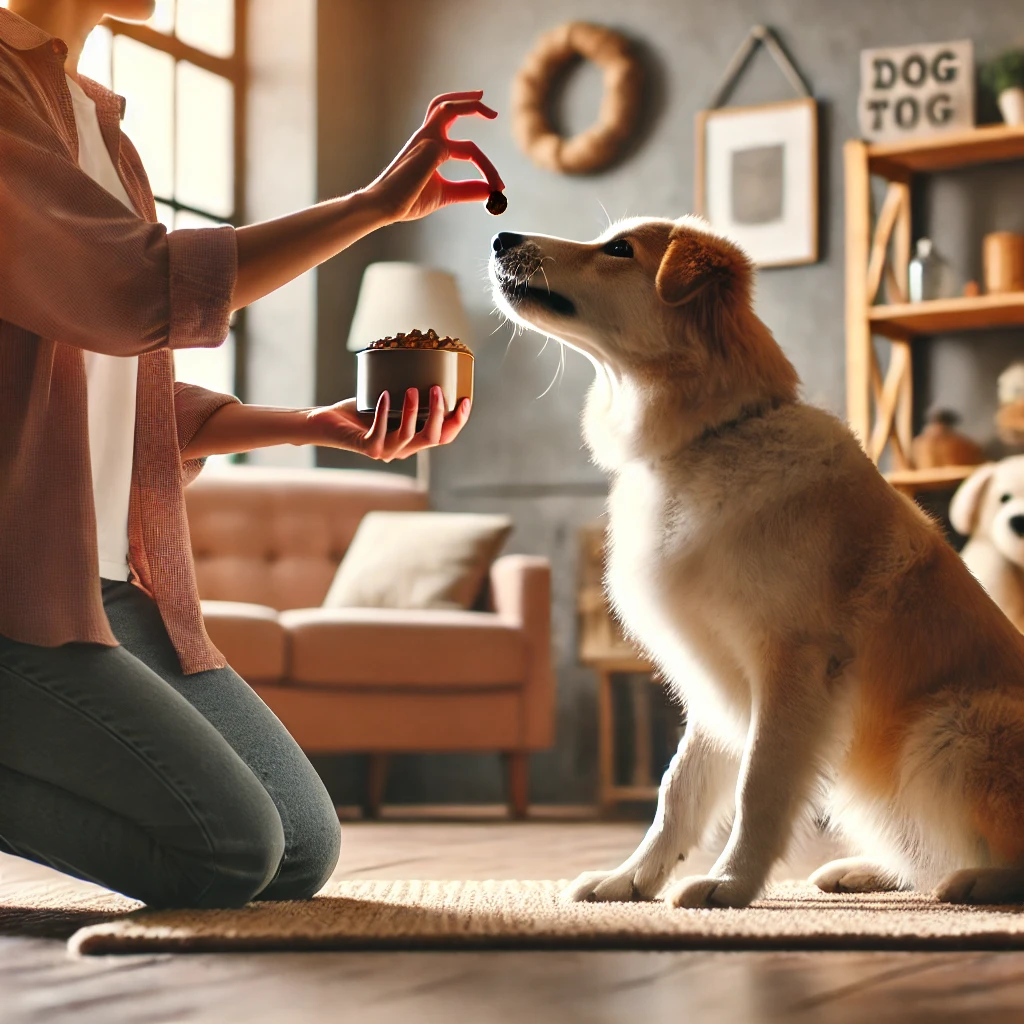
Discipline is most useful when it means teaching understandable behavior, not making a dog feel intimidated. An interruption may stop an action briefly, but the dog still needs an alternative and an environment where practicing it is possible.
Start with prevention
Store tempting shoes away, secure rubbish and provide appropriate chews. Use safe barriers when you cannot supervise. These steps prevent repeated rewards for unwanted behavior while you teach a replacement; they are not an admission that training has failed.
Teach one clear alternative
- Define the desired action, such as four paws on the floor.
- Practice in a quiet, easy setting.
- Mark the successful moment and reward promptly.
- Add distractions gradually and lower difficulty after mistakes.
For jumping, pause an overexcited greeting and resume when the dog can approach comfortably. For chewing, offer a suitable object and check the need for rest or enrichment.
Do not confuse discomfort with disobedience
A dog growling during handling may be afraid or in pain. Stop, create space and investigate rather than insisting on compliance. Punishing the warning can remove useful information without resolving the underlying concern.
Avoid hitting, pinning, choking, shock or frightening confrontations. Do not withhold water, necessary food, toilet opportunities or care to demonstrate authority. If behavior creates a bite risk, get qualified support and use management first.
A useful rule is one the dog can learn safely and the household can follow consistently. Measure improvement by comfortable behavior and fewer conflicts, not by submission.
Related guides
English edition rewritten on October 9, 2026.