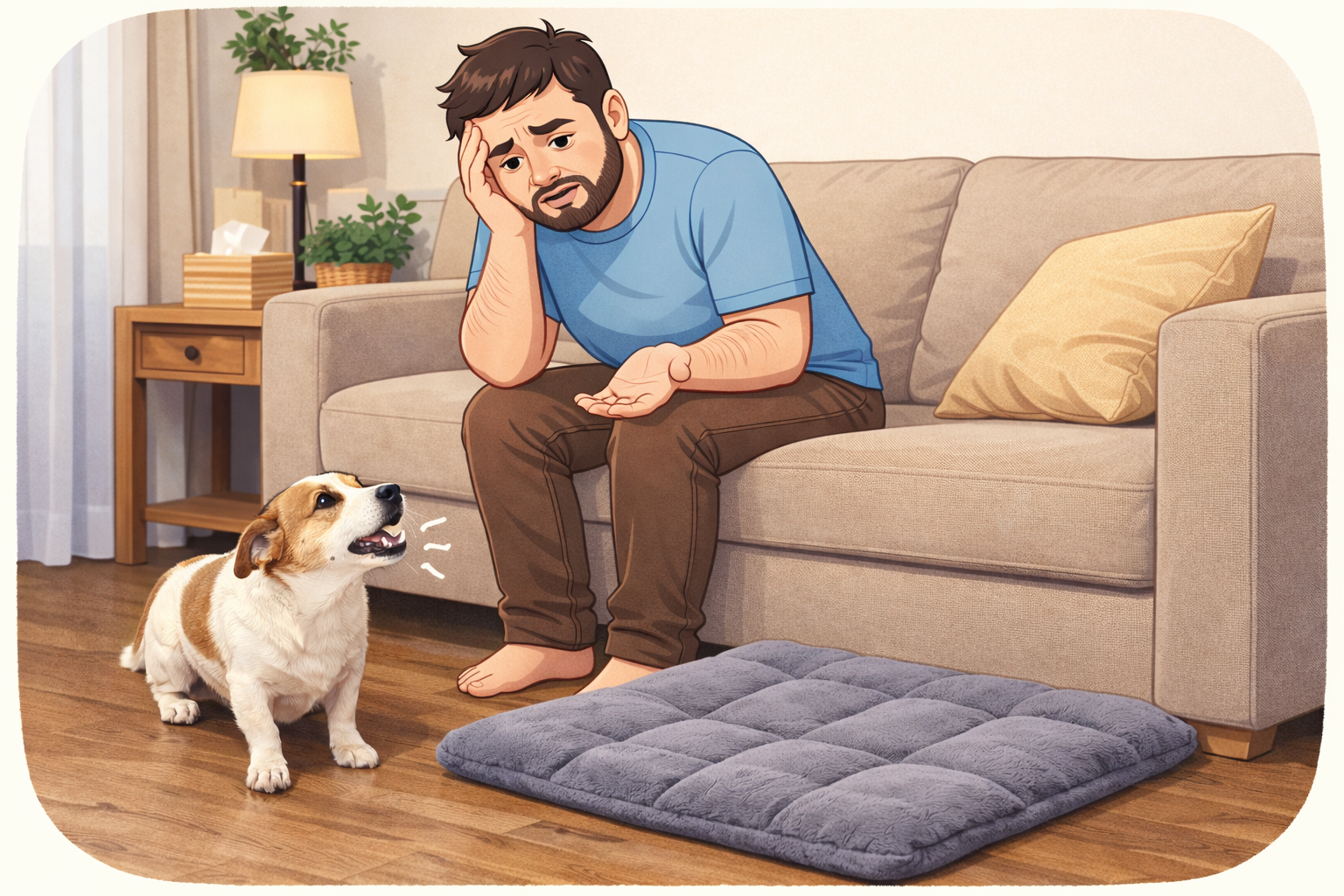
Whining is a sound, not a diagnosis. A puppy waiting for a toilet break, a dog anticipating a walk and a dog in pain may all whine. Before deciding how to train it away, check what happens before the sound and whether your dog can comfortably settle.
Check immediate needs
Consider toileting, water, temperature, rest and access to a comfortable place. New or persistent whining, especially with panting, restlessness, appetite changes or painful movement, deserves veterinary advice. Do not assume an older dog crying at night is simply demanding attention.
For predictable requests
If the dog is comfortable and whining reliably starts play or attention, teach a clearer way to ask. Reward a relaxed approach or a brief pause before the sound escalates. Offer social contact proactively during the day so the dog does not have to become increasingly noisy to be noticed.
Keep expectations achievable. A puppy who urgently needs the toilet should not have to perform a prolonged stay first.
For fear or separation distress
Increase distance from the trigger, offer calm support and allow retreat. If whining happens when you leave, use video to check for pacing, panting, escape attempts or failure to settle. Repeatedly letting a panicking dog cry does not teach comfortable independence.
Keep a short log
- Write down the time and what happened just before whining.
- Note posture, movement and any other symptoms.
- Record your response and whether the dog actually relaxed.
- Use the pattern to adjust care or discuss the problem with a professional.
The goal is not silence at any cost. It is meeting genuine needs and teaching a workable alternative when the dog is comfortable enough to learn.
Related guides
English edition rewritten on October 9, 2026.