Practical starting point
Healthy play includes excitement; the useful question is whether the dog can pause and recover. Schedule a short break before frantic biting or repeated collisions begin, then offer water and a quiet activity. Do not measure success only by immobility. Pain, frustration and too little sleep can resemble excess energy and may need a different response.
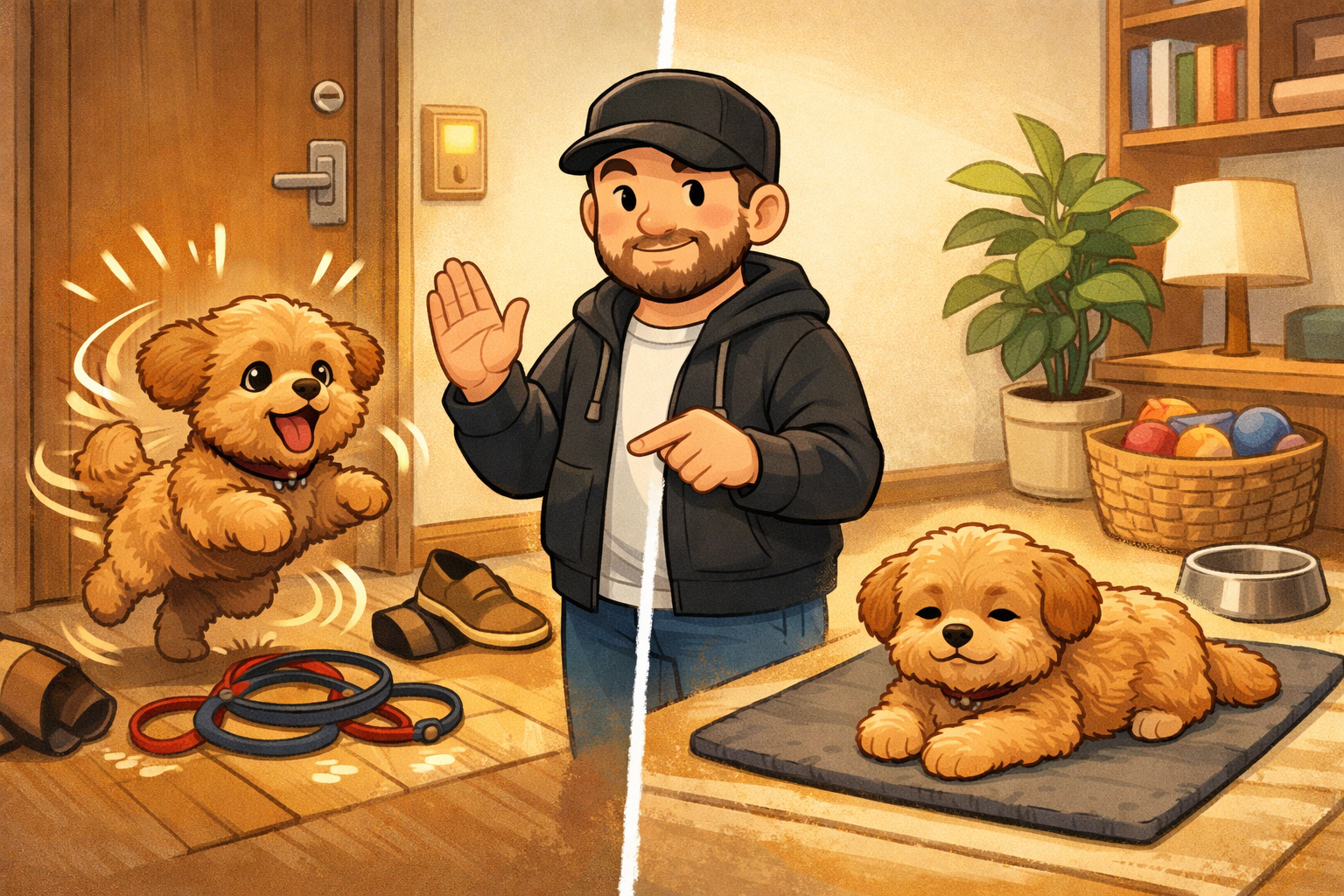
Hello. I am a Saramgom trainer.
Today, I will try to easily explain a topic that many guardians misunderstand. Actually, there was a little incident yesterday.
“My dog naturally has high tension.”
“I’m doing it because I like it, isn’t it okay?”
That’s right. Seeing a puppy excited and happy is not a bad thing in itself. However, it is a different story when the excitement rises too easily and once it rises, it does not come down easily. If this condition is repeated, problems become more likely to occur in daily life such as walking, greeting guests, playing, training, and meeting other dogs. And if your puppy is sent to kindergarten because his excitability is high, but it doesn’t improve over time, then the kindergarten is not doing its job properly. There is a high possibility that the dog has already been grouped there, so the dog gets excited just by looking at it, or the dog is in a tense state and is not stable!!!!
So today, I will tell you why an excited dog is not always in a good state and why it is important to practice calming down, focusing on real life examples.
Puppy excitement is not necessarily a bad thing
I really want to say this first.
Excitement = bad
Puppies get excited when they play, get excited before going out for a walk, and are happy to see someone they like, so their tension goes up. This reaction is very natural. The problem is the magnitude of the excitement and the speed of recovery.
To put it simply, this is the case.
- You don’t run because you like it, but you gradually lose the use of your body (falling over, rolling over, praying, unable to maintain normal behavior, etc.)
- Barking, jumping, biting, and pulling all as one set
- I don’t eat snacks and I can’t hear my guardian’s voice very well
- Can’t calm down for a long time even after the situation is over
At this point, it is correct to see it as a state that has gone beyond “feeling good” and has gone too far
Why is excessive excitement bad?
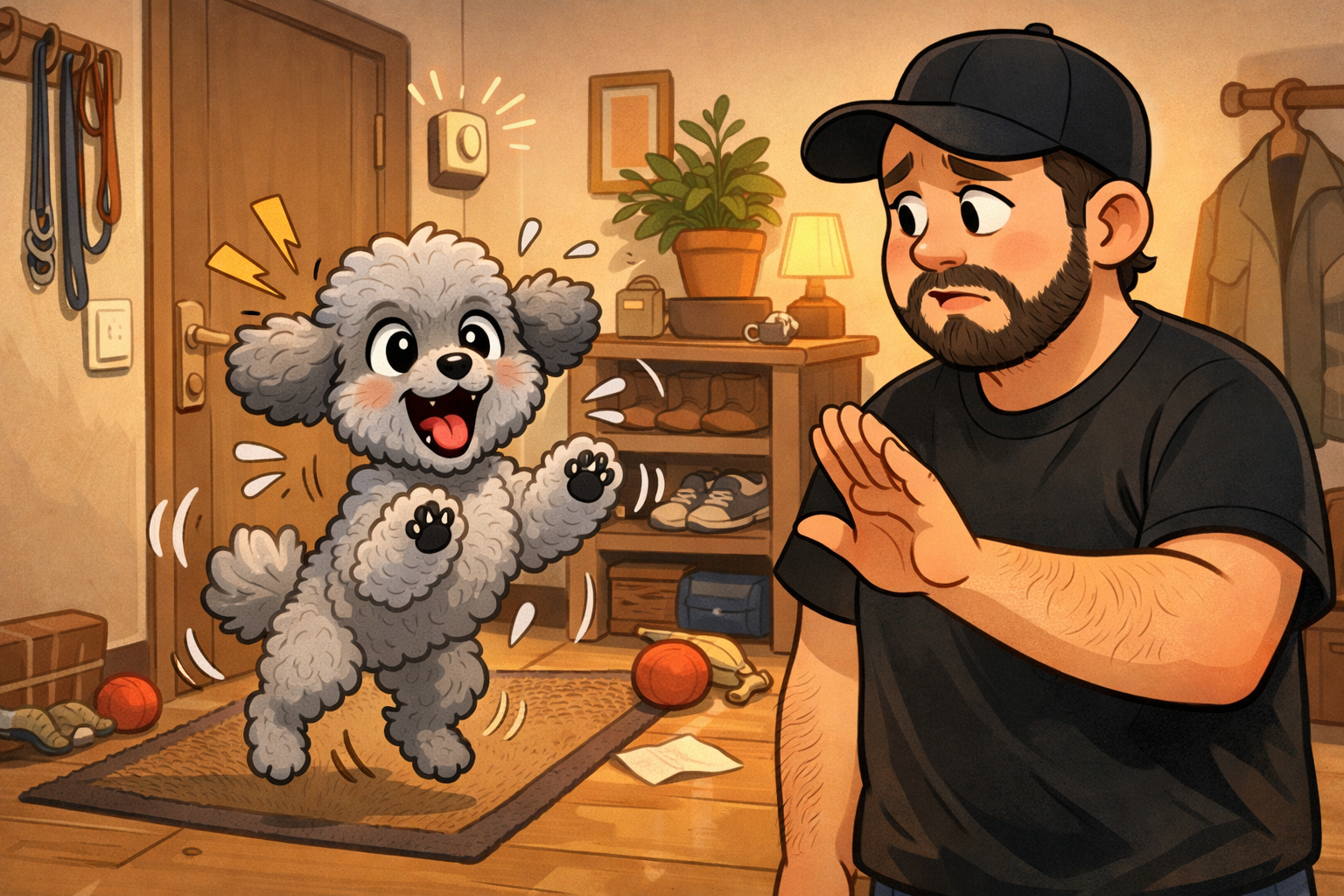
An excited dog has a narrow range of vision, thoughts, and actions.
1. It is easy for instinctive reactions to come out before learned actions
If the dog is too high, its ability to think and make choices decreases.
This is why even a child who normally says “sit,” “wait,” and “come here” suddenly falls apart when a guest comes in or sees another dog.
From the guardian’s perspective, “I know for sure, but why is it like this?” I want to, but the truth is that it’s not that I don’t know, but in many cases, I can’t do it right now.
2. It becomes easy to overreact to even small stimuli
A calm child can just take a look even when the doorbell rings.
Conversely, a child who is always in a state of hyperexcitability may react strongly to the doorbell, footsteps, elevator sounds, and signs of people outside the window.
In other words, the bigger problem may be that the body’s state of receiving it has already become sensitive rather than the problem being that the stimulation is too large.
3. Excitement can be mixed with not only pleasure but also anxiety, tension, and frustration
Even though it may seem “exciting!” in the eyes of the guardian, in reality, it is often a combination of joy + frustration + impatience + tension.
So, at some point, the behavior of jumping because it’s fun can change into barking, pulling, or slapping with the mouth.
This reaction is especially evident when walking with a tight line, waiting at the front door, visiting guests, or in situations where you cannot meet other dogs right away.
4. Daily life with guardians becomes increasingly difficult
If you live with an overly excited dog, the owner will always be nervous.
- I feel anxious every time the doorbell rings
- Just getting ready for a walk causes chaos in the house
- After playing, I couldn’t calm down and held on for a long time
- The day guests arrive, you get tired in advance
If this happens, the guardians’ voices will eventually become louder, the number of attempts to stop them will increase, and a pattern of exhaustion will be created.
Conversely, what is good about a calm dog?
1. You will be able to hear what your guardian says
Calm does not mean lack of energy.
It is close to a state in which the body and mind are organized and one can receive information.
In this state, they are much more likely to listen to their caregiver’s signals, pause, and choose their next action.
2. Fewer mistakes
In most cases, jumping, lunging, biting excitedly, pulling on the leash, and clinging excessively to customers are not done out of a “bad mind” but due to an inability to control the raised body.
So, when calmness increases, problematic behavior often decreases not because you suddenly become nicer, but because you become able to use your body.
3. Recovery is faster
The goal of good training is not to completely eliminate excitement, but to increase the strength to go up and then come back down.
Puppies encounter various stimuli throughout their lives. It’s impossible to not be shaken every time. Instead, if you can bounce back even if you shake, your daily life becomes much more comfortable.
4. Guardians also feel less tired
Beyond being easy to train, living with a calm dog has the advantage of making your day together more comfortable.
Every moment, such as going for a walk, preparing a meal, starting and ending a play, or visiting a guest, you have time to catch your breath.
Practical example
Example 1. When a guest arrives
There is a child who barks as soon as the doorbell rings, rushes to the door, hangs on the guest’s leg, and taps it with his mouth in excitement.
At this time, many guardians repeat “Sit!”, “No!”, and “Be quiet!”
But the dog is already up too high and may not be listening.
In this case, what is needed rather than scolding is to create distance from the door and practice easy rules of going to the mat or designated spot
Example 2. Just before going out for a walk
There are children who spin, bark, jump, and scratch at the door even when the harness is taken out.
Guardians have to leave quickly, so they fill up quickly and open the door.
Then it is easy for the dog to learn that “when excited, the walk starts quickly.”
In this case, you need to make a rule that you have to be calm for the door to open.
For example, put all four feet on the floor, wait quietly for 2-3 seconds, put the harness on, and then open the door when you are calm again.
Example 3. When you can’t calm down even after playing
After having fun playing with toys, the tension increases, and the child sometimes runs around the house, bites people’s hands or clothes, and is unable to rest.
These children need practice after play more than the play itself.
A routine of short bursts of play, pause, transition to sniffing or licking activities, and rest on the mat will make a big difference.
Key ways to keep your dog calm
1. Rather than scolding your excitement, seize the moment of calm
The first thing I recommend is capturing calm moments.
The puppy lay down on its own, paused for a moment, all four paws on the floor, breathing a little.
Quietly praise these moments and connect them with small rewards.
Guardians usually only respond when problem behavior occurs. But the dog needs to learn what to do.
2. Be sure to teach “rest on the mat”
One of the most practical tools for teaching calmness is a mat (kennel).
The mat is not just a place to lie down, but it can be a place to create a pattern of putting your body down and resting.
It can be used when guests arrive, when preparing a meal, when a guardian is talking on the phone, or when waiting for a moment before going for a walk.
3. Please cut it off before it goes too high
Training is much easier before an explosion than after it.
If you try to clean up after a mess has already been made, it will be difficult for the guardian and the dog will also experience failure.
Look for patterns of heightened excitement, such as the doorbell ringing, waiting at the door, a specific toy, another dog, or a specific time of day, and intervene before that happens.
4. Please don’t think of walking as just “getting excited”
Many people think that if they run a lot, they will get tired and become calm. Of course, exercise is important.
However, for some children, fast ball play, excessive chase play, and high-tension interactions can actually make them worse.
So, a walk must include not only exercise, but also sniffing, walking slowly, stopping, and matching the rhythm with the guardian.
5. Sleep and rest are also training
Surprisingly, many dogs become more sensitive because they do not rest well even when they are tired.
If you lack a nap or continue to be stimulated, tension can increase and reactions can increase even to small things.
Create a quiet space to rest, a consistent routine, and time to clean up after play.
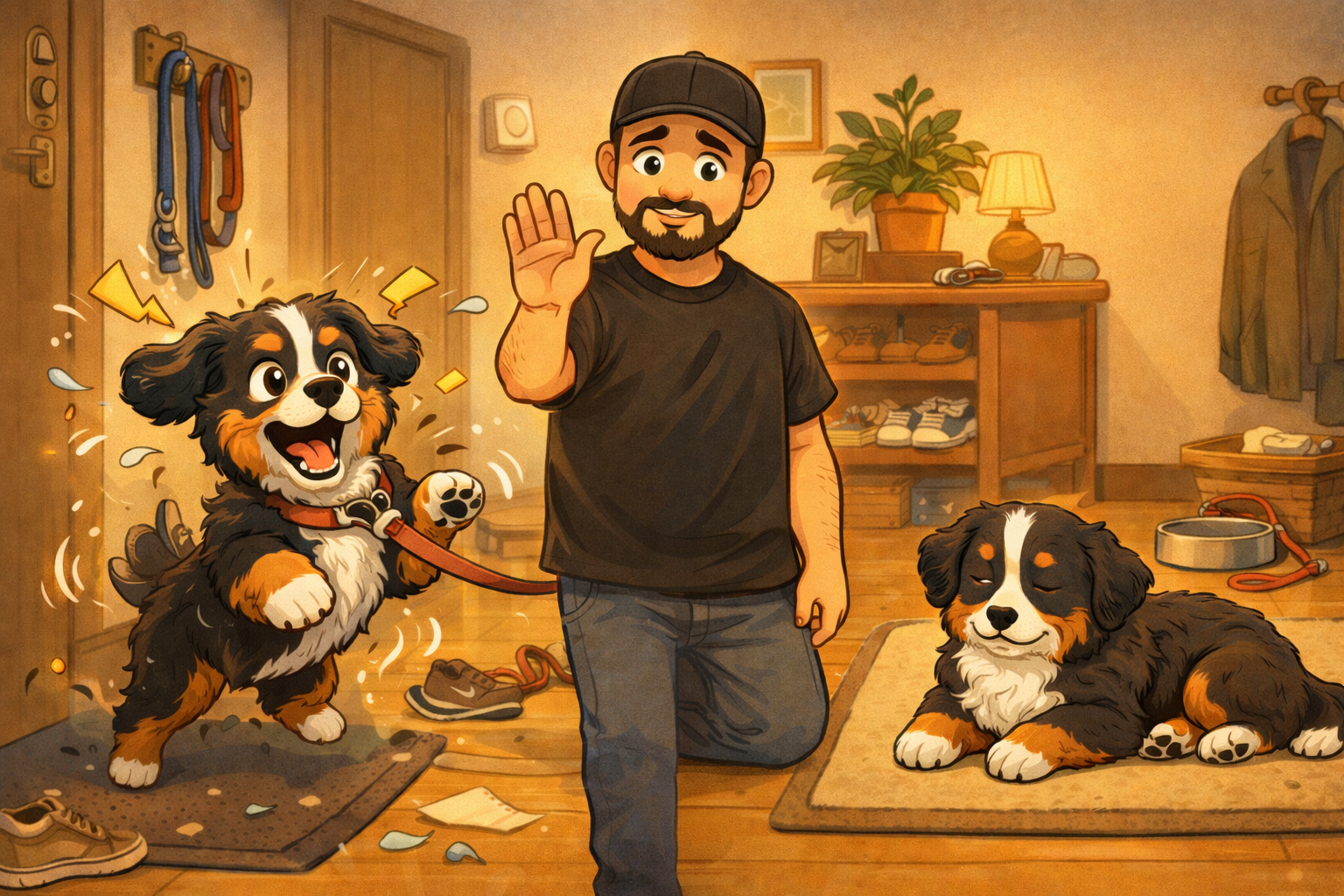
If you compensate for the moments when you become calm, you will become a calm dog.
Something I really want to say
Keeping your dog calm doesn’t mean making your child boring or killing his personality.
In fact, it’s the opposite. Helping you be able to have fun when you’re excited, stop when you need to stop, and come back comfortably.
That’s really good training. A child who is always excited may seem active, but in reality, daily life can be difficult.
Conversely, children who learn to be calm are more likely to live comfortably with their guardians.
In this case, get help
- As excitement rises, it spreads to biting or aggression
- Difficulty controlling certain stimuli, such as guests, walks, other dogs, doorbells, etc.
- Recovery time after excitement is too long
- Anxiety, sensitivity, and wariness are seen together
- The guardian is already very tired and scared
In this case, it is not a simple matter of etiquette, but may be a matter of emotional control and environmental design, so it is much faster to find the right direction than to endure alone.
Frequently Asked Questions
Q. If my dog is naturally active, is calm training meaningless?
No. A lively personality and a calm personality are not opposites. Even children with a lot of energy can learn how to rest, wait, and come down.
Q. If you scold them, they immediately become quiet, so isn’t that effective?
Even if it appears to have stopped on the outside, internal tension and pressure can increase. So there are cases where it pops up later with a bigger reaction. The important thing is not to push it down, but to make it controllable.
Q. Is calmness innate or can it be taught?
There are definitely differences in temperament, but the habit of calm rest and resilience can be taught. Environment, routine, caregiver response, and training method have a big impact.
I’ll organize it.
It is not a bad thing for a dog to be excited.
However, if it goes up excessively, does not come down well, and mistakes are repeated in that state, it may be a sign that management is needed.
Good training is not about suppressing the child unconditionally, but a process of making calm choose more often than excitement
Starting today, don’t just look at “Why am I so excited?”
Please take a look at “When does it start to go up and how can it come back down?”
From that moment on, training becomes much smoother and more accurate.
A good article to read together
- Why dogs are sensitive at home, the environment to look at before training
- Separation anxiety, barking, hyperexcitability… Problems that arise at home can be solved with one seat training
- A dog that bites, barks, and gets angry when guests come over: How to stop buying it today and change it within 2 weeks
- How to fix dog pulling when walking: 7-day human-style routine (leash-focused)
- Causes, symptoms and management of dog stress
- If I am anxious, will my dog become more anxious?
- 7 things that homes where dog training fails
※ The Merck Veterinary Manual explains that dogs in a state of high arousal react reflexively, which may hinder learning, and excessive arousal can also increase the risk of attack. A 2025 study also reported that basically, dogs with high arousal may perform worse as arousal increases during training, supporting the point that it is better to cultivate calmness and resilience that suits individual tendencies rather than “make them excited.”
Also, AAHA advises that learning to calm/settle/relax from a young age can have a huge impact on how dogs handle anxiety-provoking situations later in life, and AVSAB recommends only reward-based training based on current scientific evidence. In a study introduced by UFAW, dogs that received more aversive/pressure-based training showed more stressful behaviors and higher post-training cortisol increases
Related guides
English edition copyedited and supplemented on October 9, 2026.