Practical starting point
Notice one quiet behavior you want to see more often, such as resting nearby, and offer gentle attention before barking starts. First meet toilet, activity, social contact and rest needs. If quiet attention excites the dog, use a calmer reward or leave them to sleep. This is not a reason to withhold reassurance from a frightened dog.
Your dog lies quietly beside you while you scroll. A paw lands on your knee: “One moment.” One bark: “What is it?” Two barks, and finally your hand moves. There is plenty of love in this house. Your dog has simply learned that reaching customer service requires pressing the call button.
Try noticing your dog before the demands begin. Meet everyday needs proactively, and acknowledge relaxed behavior while it is happening. You do not need a new command for every good moment.
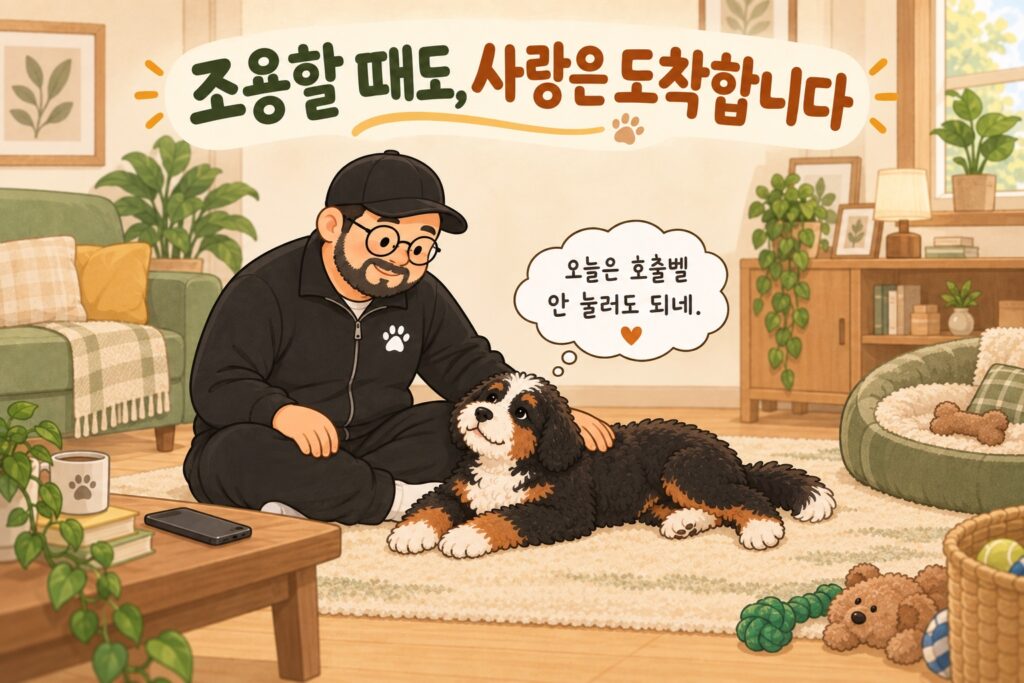
Quiet moments count as good behavior
We notice stolen slippers, scratched furniture and barking. A dog playing independently, waiting briefly or resting nearby can fade into the background. If excitement reliably brings conversation and touch while calm behavior brings nothing, a dog may learn which approach works best.
Look for a chance to say “That is lovely” as well as a chance to say “Stop.” This does not mean monitoring your dog all day. Choose one quiet moment you usually miss.
Provide care first, then reward the behavior you like
These are two related tasks. First, provide toilet opportunities, water, appropriate meals, sniffing, play and uninterrupted rest. Second, offer a small reward when an awake dog chooses to settle or approach with four paws on the floor.
Basic needs are not prizes for obedience. Do not make a dog earn water, necessary food or a toilet break. Affection does not need an admission test of sit, down and stay either.
Why this can help
Attention can reinforce behavior: when pawing or barking repeatedly starts a game, those actions may become more frequent. When a relaxed approach also works, your dog gets practice using a quieter way to connect.
If demands usually start in the evening, check whether your dog has had a toilet break and suitable activity before that time. Offer a short game while your dog is still comfortable. Familiar sequences—walk, water, then rest—can make daily life easier to predict without requiring a rigid timetable.
Praise without launching a party
A dog settles, and we celebrate with an enthusiastic speech and a full-body wiggle. The dog springs up. “Why are you excited again?” Well, the host did just open the festival.
Try a soft word, a small treat placed nearby or quiet company. Watch what happens afterward. Can your dog stay loose and return to resting when the attention ends? If every reward creates intense anticipation, reduce your voice and movement or change the reward. Do not wake a sleeping dog to congratulate it on sleeping.
Touch is a reward only if your dog welcomes it
Briefly stroke a comfortable area, then pause. A loose-bodied dog moving closer may want more. Turning away, leaning away or leaving means stop. Stillness alone is not permission: consider tension and the whole situation.
Let your dog decline. Do not follow it into its bed to insist on affection. Quiet company, suitable food or a brief game may be a better choice than touch.
Three useful moments to change
- When you put your phone down: notice an awake, relaxed dog before pawing starts.
- When your dog approaches calmly: acknowledge four paws on the floor before jumping becomes necessary to get a response.
- Before you become busy: arrange water, a toilet opportunity, appropriate activity and a comfortable resting place. Make time to reconnect afterward.
What if the demands have already started?
Check the reason. Urgent toileting, pain, fear and difficulty being alone are not simply bad manners. Help with those needs. Comforting a frightened dog is a different situation from starting a game every time it barks.
For learned attention seeking with needs already met, teach an easy alternative separately, such as standing calmly or going to a mat. Avoid repeating “bark, pause, treat” all day: the whole sequence can become a habit. Create more opportunities before barking begins.
Measure comfort, not perfect silence
Notice whether calm approaches increase, your dog can rest after affection, and play ends more smoothly. This routine may help attention-related barking, pawing and jumping. It cannot promise to prevent or treat every case of separation anxiety, aggression or sound fear. Sudden changes, painful touch or persistent distress need individual assessment.
Reliable care, warm contact and time to rest independently belong together. Love does not need a doorbell.
Read the original Korean guide · Browse all English stories
Related guides
- Dog Training by Life Stage: What to Teach from Puppyhood to Senior Years
- Rough Dog Play: How to Tell When to Step In
- Is It Really Dominance? Seven Dog Behaviors and Better Ways to Respond
Related guides
English edition copyedited and supplemented on October 9, 2026.